Embracing the AI: How Artificial Intelligence is Revolutionizing Creativity
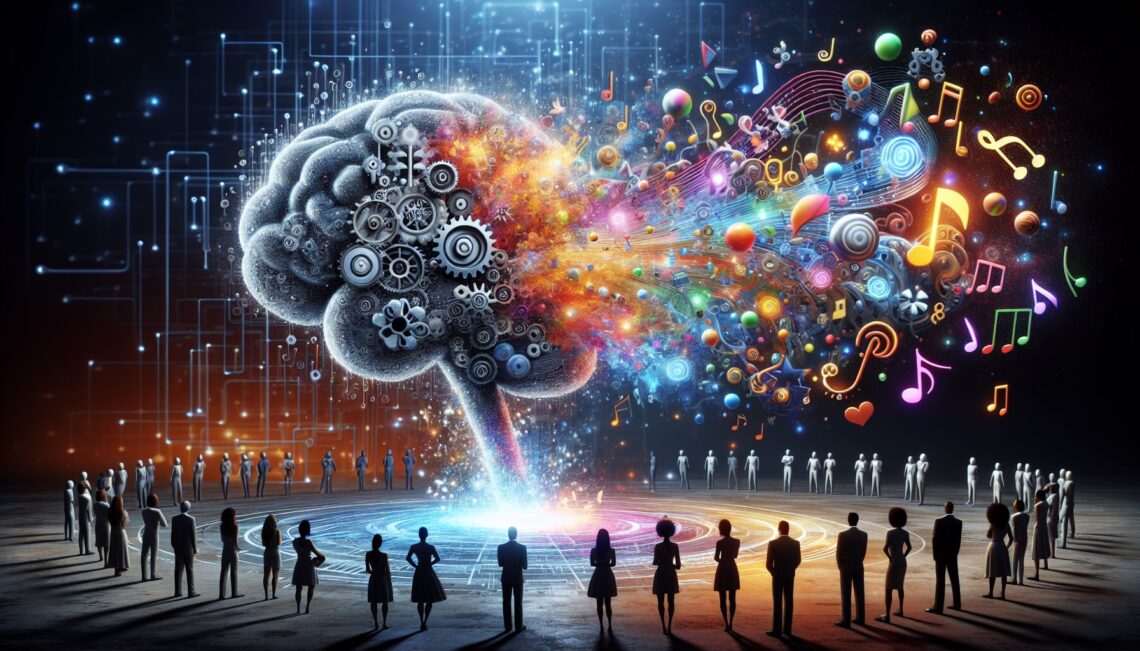
Hey folks! Today, I want to chat about something that’s been on my mind lately: the intriguing intersection between artificial intelligence and creative arts. I know, I know—AI is everywhere, right? From recommending what series to binge next to helping us avoid yet another culinary disaster with smart kitchen gadgets, it’s already made itself at home in our daily lives. But AI cozying up to the arts? Now that’s a fascinating realm worth exploring.
The New Muse: AI in Art and Design
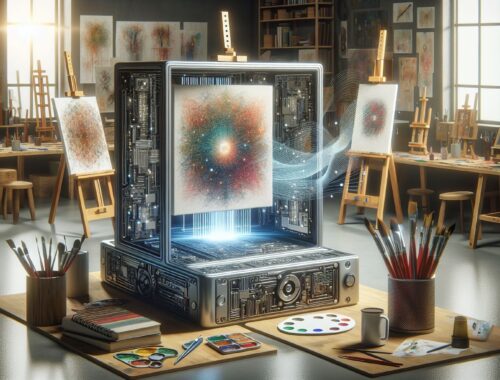
Alright, let’s set the stage. Picture the stereotypical artist: perhaps they’re painting in a studio, creating out of the chaotic swirl of inspiration and emotion. Now imagine an algorithm sitting there, digital brush in (metaphorical) hand, contributing to the world of art. Mind-blowing, isn’t it?
Artists and designers are increasingly partnering with AI to extend their creative boundaries. Consider the work of Refik Anadol, who uses machine learning to create mesmerizing digital installations that feel like they’re beamed in from a future galaxy. These collaborations challenge our definition of creativity. No longer confined to human notion, artistic expression is now a dance—a tango of human input and machine processing.
AI’s adeptness with data analysis gives it a unique perspective. For instance, GANs (Generative Adversarial Networks) can produce visual art that mimics human styles, from Renaissance to Impressionism, opening new avenues for artists to explore concepts and critique our relationship with technology. It’s an art revolution, folks, with pixels and algorithms as its avant-garde tools.
Music to Our Ears: AI in Sound and Composition
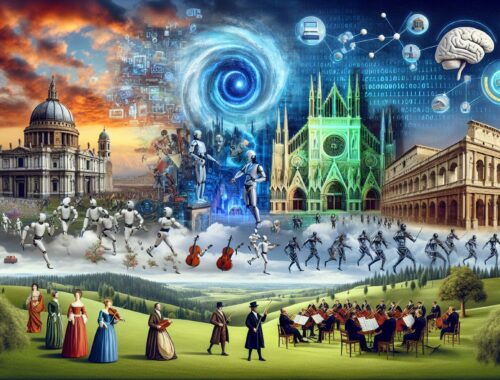
How about music, you ask? AI’s making waves here too, pun intended. Imagine your favorite classical composition being enhanced by an AI that forecasts what Beethoven might create if brought into the modern studio. Spooky or spectacular? Maybe both.
Tech like OpenAI’s MuseNet can compose music resembling the styles of Bach to The Beatles, blurring lines between tech-generated and traditional compositions. And with tools like AIVA (Artificial Intelligence Virtual Artist), we’re seeing AI co-composers popping up, assisting in soundtracks for movies and video games. It’s not just about mimicry, either—AI is inspiring musicians to think outside the box, to explore unconventional melodies and rhythms harnessed from the randomness of algorithms.
Yeah, it’s crazy to think of an AI at your next jam session, but that’s kind of the beauty of it. It challenges musicians to wholly re-imagine the creative process, allowing for a fusion of tech and talent in a way that hasn’t been possible before.
Deep Fakes and Real Feels: AI in Film and Media
Alright, let’s talk the silver screen. Movies have long been crafted with emerging technology, whether it’s CGI conjuring dinosaurs or soundtracks designed by software wizards. But AI is prying the director’s chair wide open, folks.
Take deep fake technology. Okay, I know—sometimes it’s creepy. Whether it’s putting words in the mouths of public figures or creating entirely fictional scenes, it’s a controversial tool. Yet, in a controlled, ethical environment, this tech can enable groundbreaking storytelling. Imagine actors from different eras ‘performing’ together, or entirely synthetic characters introducing wholly new narrative forms.
There’s also script-writing tools powered by AI, algorithms capable of wrapping their bits and bytes around character arcs and plot twists. Don’t fret, screenwriters—your wild imaginations won’t soon be replaced, but AI can offer wrinkles to conventional storytelling methods and provide fresh takes through pattern recognition and predictive structuring.
Challenges and Concerns: Navigating the Ethics
Before we go all fanboy on AI, let’s put on the breaks and get serious for a minute. The merging of AI and the arts isn’t without its share of ethical conundrums. Who gets credit when an AI-generated artwork sells for a million bucks at Christie’s? How do we ensure deep fake technology doesn’t outpace legislation and create more harm than good?
There’s also the fear of homogenization—the risk that art could become standard and lifeless when too reliant on algorithms that replicate known patterns. We don’t want the vibrancy of human whimsy washed away by predictability, do we?
These are questions we need to address as we welcome AI into the creative process. Much like any tool, the ethical implications hinge on its use. Transparency and thoughtful regulation will be key.
A Future Canvas: What’s Next?
So, what’s next in the world of AI in creative arts? Expect to see more sophisticated collaborations as technology continues to evolve. Imagine VR experiences crafted with AI that adapt and respond to your emotional state, offering a truly personalized experience. We’re talking art that grows with you, not static pieces stuck in time.
AI-powered crowd-sourcing for large-scale projects could become the norm too. Picture taking your next short film idea and testing it with AI-curated audience feedback from millions of virtual viewers, each offering unique perspectives.
Ultimately, AI isn’t here to steal the brush, baton, or camera—it’s a co-pilot, opening doors to unfathomed creative landscapes. As artists and technologists, we get to steer this new ship toward untold creative horizons.
Maybe AI won’t ever replace the human touch—the imperfections, the serendipity of creative accidents—but that’s not the point. AI is a new collaborator on the canvas of creativity, and I, for one, can’t wait to see what this unlikely partnership yields. So, let our imaginations run wild and marvel at this brave new world where bytes and brushstrokes unite.