The AI Woodstock: How Artificial Intelligence Is Redefining Creativity
Hey friends, tech enthusiasts, and curious minds! Today I want to take you on a ride into the thrilling realm of Artificial Intelligence (AI) in the creative arts. We often hear about AI taking over jobs, driving our cars, or even diagnosing our medical ailments, but have you paused to think what part AI might play in art, music, and literature? Yup, that’s right! Machines are not just crunching numbers; they’re now trying their hand at penning poems and crafting canvases. Let’s explore this brave new world where creativity is no longer a just a human domain.
Art Made by Machines
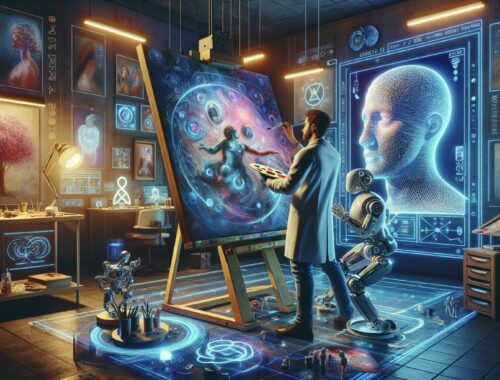
You know, there was a time when the idea of a machine painting anything more than a wall was, well, laughable. But here we are, with AI systems like DALL-E and Midjourney producing art that is not only aesthetically pleasing but also downright thought-provoking.
The Rise of the AI Artist
Remember the moment when “Edmond de Belamy,” a piece of AI art, was auctioned at Christie’s for a jaw-dropping $432,500? It wasn’t just the price that caught the world’s attention, but the debate it stirred—what even is art if a machine can create it? Does art require intention? Emotion? Can an algorithm have a soul? The sale marked a tipping point, sparking questions about authorship and what it means to be ‘creative.’
The truth is, AI’s journey to become art apprentices and collaborators wasn’t easy. Initially, these AI models needed to learn from countless artworks, recognize styles, comprehend rules, and then break them to develop new, creative outputs. It’s almost like how every art student spends countless hours in front of a canvas, right?
Challenges in AI Art
But let’s not sugarcoat everything; AI has its challenges too. First off, most AI models aren’t originally creative—they’re machines that follow patterns, recognize data, and replicate. That’s why they require tremendous amounts of human input for training.
There’s also the “Black Box” problem—a term we geeks use to describe the opaque nature of AI decision-making. Even the creators often don’t know why their AI made a specific decision in crafting an artwork. It’s like AI is this mystical oracle splattering paint on canvas while everyone around it scratches their heads in bewilderment.
Coders With Guitars
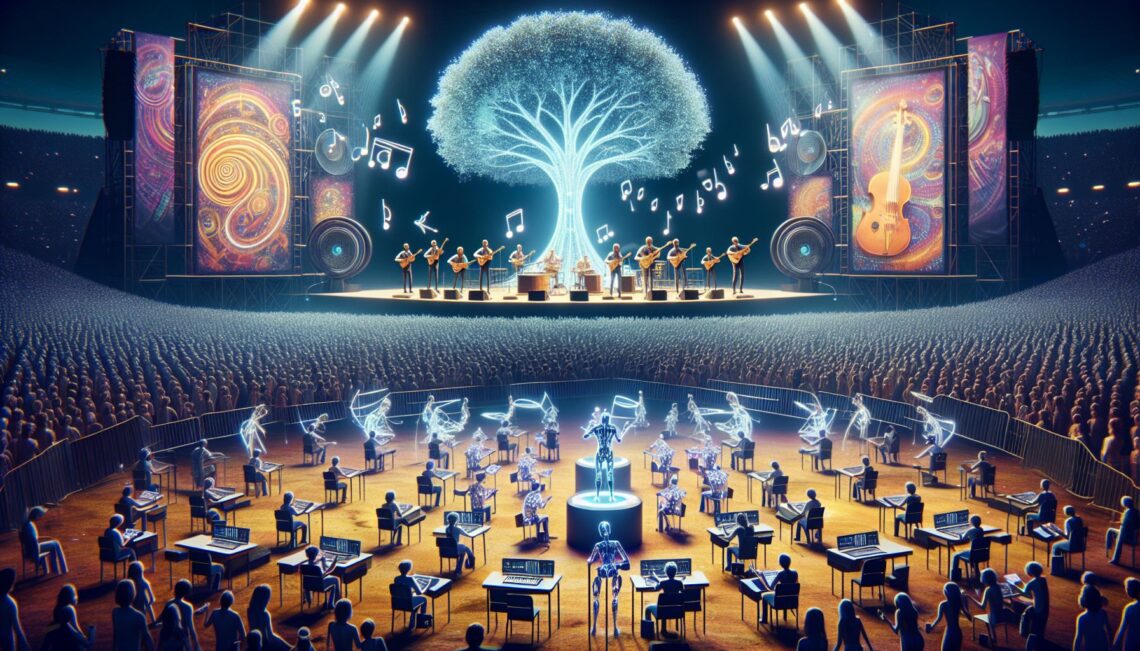
Alright, musos, I haven’t forgotten you! AI in the music world is like one of those experimental bands no one can pronounce properly (Sigur Ros or Neutral Milk Hotel, anyone?). While you might think that music requires a heart and soul, AI is proving capable of composing symphonies and pop tracks alike.
Jamming With Algorithms
AI can analyze centuries of musical compositions and then create something new. For instance, OpenAI’s MuseNet has a staggering ability to generate multi-instrumental music, blending the lines between genres. Picture Beethoven collaborating with the Beatles, and you’ve got a rough idea.
Machine learning algorithms today can replicate an artist’s style almost perfectly; this means you could have a posthumous collaboration with someone like Freddie Mercury, where you provide the vocals, and the AI does the rest!
The Maestro’s Toolbox
However, don’t assume musicians are being pushed out of business. Instead, think of AI as like an advanced jam buddy. Artists can use it for brainstorming, mixing tracks, and even perfecting production techniques. In fact, AI can handle the nitty-gritty of sound engineering, giving artists more time to focus on what they do best—creating music that moves us.
Machines With a Penchant for Penmanship
Now let’s dive into something a little more close to my heart—writing! You’ve probably heard of GPT-3, one of the smartest writing AIs out there. Built by OpenAI, it’s the wizard of written words, capable of generating essays, poems, and even human-like conversations.
The New Age of Storytelling
One of the exciting applications of AI in literature is interactive storytelling. Imagine reading a novel where you can influence the ending, or a history textbook that predicts future chapters based on current events. AI is making “Choose Your Own Adventure” novels and dynamic storytelling not just possible but plausible.
But, not everything’s rosy. Some critics argue AI lacks the human touch that a compelling story requires. It’s true—AI can weave narratives and characters, but often, these stories are missing the depth and emotional complexity only a human mind can impart.
Ethics and Literary Pursuits
And here’s the ethics part—just as in art, we have to wrestle with questions of authorship and originality. Who owns the story an AI writes? Is it the programmer, the machine, or neither?
Where Do We Go From Here?
A future where AI and humans coexist creatively is no longer just science fiction. We’re bordering on a techno-utopia where machines don’t just assist us, but inspire us.
Artists, Embrace the Machine
So, if you’re an artist, a musician, or a writer reading this, don’t fear that AI is after your job. Instead, see AI as your next-gen tool that brings endless possibilities. Just like every artist evolves with new tools and techniques, embracing AI will be the key to unlocking levels of creativity previously unimaginable.
Bold Predictions
So, what could the future hold? Imagine AI-driven art curations in museums, where exhibits change dynamically based on visitor interactions. Or what if Spotify’s Discover Weekly became so intuitive, understanding your musical preferences so deeply, that it was like your best friend making you a mixtape every Monday?
Uncertain as it may seem, the future of AI in creative arts is overwhelmingly exciting. We must ensure this journey is driven by curiosity, responsibility, and a shared passion for innovation.
Thanks for getting this far on today’s creativity rollercoaster. Jump into the comments and let me know what you think. Are you excited, concerned, or just plain curious? Until next time, keep creating, keep coding, and let’s paint some pixels with our imaginations!