The Creative AI Renaissance: Transforming the Arts, One Algorithm at a Time
Greetings from the rollercoaster ride that is the tech world! Grab your VR headsets, because we’re diving headfirst into a brave new world where artistry meets artificial intelligence. It’s a topic that’s got my brain buzzing more than a freshly charged Tesla—AI in the creative arts. You’ve heard of code writing poems and neural networks painting masterpieces, but let me take you deeper into this modern-day tech wizardry.
The Dawn of Artistic Algorithms
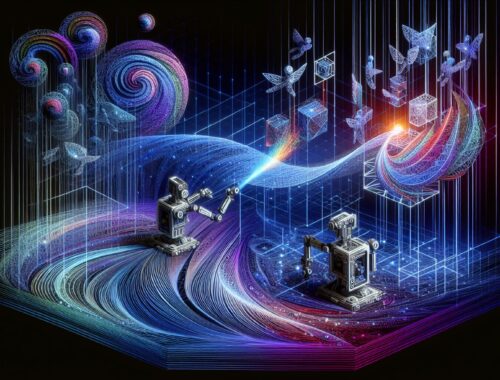
Before we go any further, let’s rewind a bit. Once upon a time, AI was mostly synonymous with dull, number-crunching tasks or chess-playing robots that made us humans feel like we should stick to checkers. But then something magical happened—someone asked, “Hey, why can’t machines create art?” Fast forward to today, and we’ve got AI composing symphonies and designing jaw-dropping art pieces that leave even seasoned artists doing a double-take.
The real kicker came when projects like DeepArt and Runway ML threw their creations into the mix. That’s right, these algorithms aren’t just here to carry out boring repetitive tasks; they’re redefining how we think about creativity itself. Take OpenAI’s DALL-E, for instance, which can take a concept as wild as “a two-headed flamingo painting a sunset” and spit out visual art that’s nothing short of mind-bending.
The Tech Behind the Magic: How AI Creates Art
Now, you might be asking, “But how does a bunch of ones and zeros pull a Banksy?” Hold on to your hats, folks, because things are about to get a bit technical. At the heart of most creative AI is a technology called generative adversarial networks, or GANs for short. Imagine two AIs locked in a never-ending duel: one trying to create images and the other critiquing them. Over time, this back-and-forth doesn’t just create art—it hones masterpieces.
And let’s not forget about neural networks. These beauties are layered systems (a bit like ogres and onions, they have layers) that can learn and evolve skills like recognizing patterns or generating hilariously accurate memes. By feeding these systems vast amounts of data (think more paintings than the Louvre) they start picking up on what makes art… well, artful.
Why Artists Are (Mostly) Excited
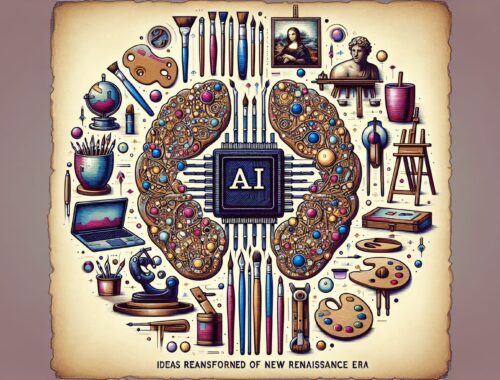
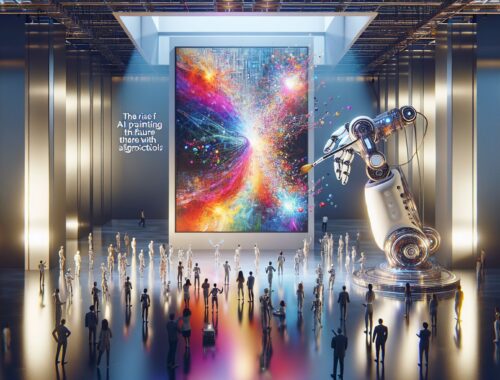
I know what you’re thinking—are artists shaking in their boots? Is there a virtual Van Gogh about to steal all the limelight? Surprisingly, a number of artists are embracing this new wave of AI-powered creativity. Many see it as a tool to enhance their own work, not replace it. The sheer scale and speed at which AI can generate concepts allow artists to explore ideas faster and push creative boundaries further than ever before.
Remember when Bob Dylan famously said, “The times, they are a-changin'”? Well, AI isn’t just changing, it’s shaking things up like an artist on a caffeine high. Collaborations between humans and machines are already producing astonishing results. From fashion design to music production, AI is lending its unique approach to a plethora of creative endeavors.
The Big “What Ifs?” and Future Outlook
Now let’s go down the rabbit hole of speculative imagination for a second. Today’s tech pioneers are already toying with the idea of expanding AI from visual arts to more abstract forms such as storytelling. Imagine an AI writing a screenplay that wins an Oscar or composing a hit single synthier than Daft Punk’s finest.
But there’s more than just potential accolades. Imagine providing access to art for communities who may have been economically or geographically isolated. AI democratizes creative tools, letting budding artists in less conventional locales show off their flair without ever leaving their hometown. In essence, AI could play a significant role in igniting a worldwide creative revolution.
Of course, it’s not all digital roses and cyber rainbows. There’s still much to consider about intellectual property rights with AI-generated content. Who owns a work of art created by an algorithm? What happens when AI inevitably creates something so groundbreaking it calls into question the definition of creativity itself?
My Take on Our Pixel-Pushing Future
Personally, I’m feeling optimistic about this tech-art fusion. True, there’s uncertainty—AI, like a temperamental cat, can be unpredictable. But how often do we get to witness a renaissance in real-time? As a self-proclaimed tech geek with a soft spot for all things artsy, I can’t help but geek out at the possibilities.
Whether it’s enhancing the creativity of artists, offering tools for those who previously went without, or creating entirely new forms of expression, the role of AI in the arts feels like a backdrop painted in vibrant, unpredictable colors.
And if this post has set your neurons alight with ideas, why not dive into the creative playground that is AI? Who knows—maybe you’ll be the next tech-laureate, creating the digital Da Vinci that rivals the Sistine Chapel! Now, if you’ll excuse me, I’m off to see if an AI can help me conquer that blank canvas sitting in the corner of my studio. Happy creating!