The Dawn of Quantum AI: When Two Giants Collide
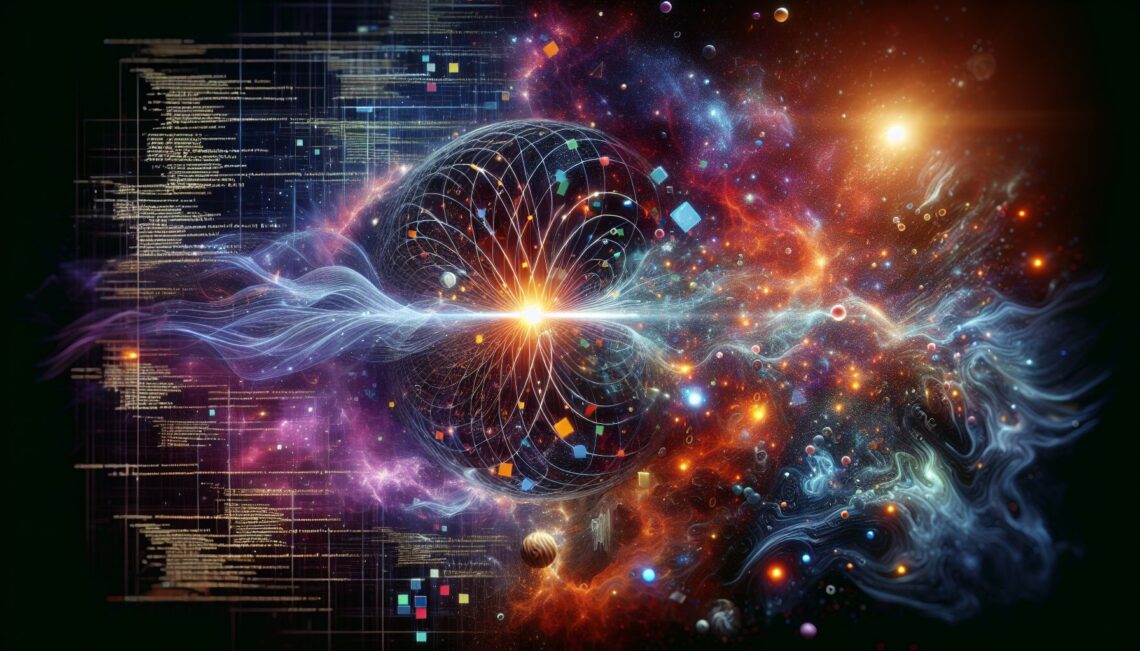
Hey there, tech enthusiasts and fellow futurists! Today, I’m thrilled to dive into a topic that’s been on my mind ever since the term “holodeck” became more than just sci-fi jargon. We’ll be uncovering what could arguably be the most transformative tandem since peanut butter and jelly: Quantum Computing meets Artificial Intelligence. Yes, you heard me right—two colossal forces joining hands (or should I say processors?), potentially altering the fabric of reality as we know it.
Setting the Stage: The Age of Quantum Computing
Let’s kick things off with a quick recap of quantum computing. Look, I’m no Schrödinger, but I reckon we’ll soon be seeing these mindboggling machines taking over certain high-stake computing roles. Traditional computers, bless their silicon hearts, operate in a binary world—ones and zeroes, on or off. But quantum computers? They live in a fuzzy overlap, a wonderland where qubits can exist in multiple states at once.
Think of it like juggling. Classic computers have two arms, handling one ball at a time. Quantum computers? They’re like a hyperactive octopus juggling in a multidimensional universe.
The Quantum Leap in Big Data
Now, you might be wondering, “Why should I care?” Well, once these quantum masterminds get going, they’ll make cracking complex problems look like solving a kid’s puzzle. From simulating chemical reactions for drug discovery to optimizing logistical nightmares, these machines will chew through big data like it’s yesterday’s news. And who else loves swimming in vast oceans of data? You guessed it, Artificial Intelligence.
Enter AI: Data’s Best Friend
AI, Machine Learning, Deep Learning—whatever you fancy calling it—has been the talk of the town, and for good reason. It’s already embedded in our daily lives more than we realize, from recommending your next Netflix binge to deciding the fate of your online shopping cart.
Why AI Needs a Quantum Boost
AI models require vast amounts of computational power to learn and adapt. I mean, training a sophisticated AI model is almost as long-winded as deciphering a legal document. Now picture this: What if quantum computing could perform all those computations in just a fraction of the time? Imagine an AI model being trained not in weeks but hours, even minutes!
This isn’t just theory. We’re already seeing early collaborations between companies like Google and IBM merging quantum computing with AI projects. Trust me, the synergy is palpable, like two techno-spaniels excited to see where their playful romp leads.
The Synergy: When AI and Quantum Computing Shake Hands
Alright, let’s dive into the nitty-gritty of this beautiful relationship. It’s not all just theoretical mumbo jumbo; AI coupled with quantum computing might very well be our golden ticket to crack some of humanity’s biggest problems.
Bringing Chaos to Order
With quantum-enhanced AI, our ability to predict and model complex systems skyrockets. Whether it’s predicting climate change more accurately (saving us from oblivion via greenhouse-effect-induced Armageddon) or designing revolutionary materials for tech and medicine, the potential applications are near endless.
Think about what this means for real-time decision-making systems! Quantum AI can learn from and adapt to the world at mindboggling speeds, making it a perfect fit for autonomous driving systems, advanced robotic automation, and even revolutionary healthcare diagnostics.
Understanding Human Complexity
As AI algorithms become more robust, they start mimicking some very human-like behaviors. But guess what? With quantum assistance, they could understand us in ways we’ve never experienced before—more empathy, fewer algorithmic biases, and we’re talking a new spectrum of creative outputs.
Down-to-Earth Challenges
Before we get too starry-eyed, let’s ground ourselves a bit. There are still some pretty gnarly obstacles to overcome before we smash open the bubbly and celebrate Quantum AI Day.
The Hardware Conundrum
Building and maintaining a functional quantum computer isn’t exactly plug-and-play yet. We’re dealing with hardware that’s more delicate than a soap bubble on a hot day. Entire teams of geniuses have dedicated years to wrestle with these fragile beasts, but mass production for everyday use is still a halo we chase.
The Skills Gap
And let’s not forget about the massive skills gap. Oh, the excitement of learning quantum mechanics just to write a new line of code! (Said no one ever without a cringe-worthy wince.) The world needs a new league of “quantechies” who can navigate both AI’s complexities and quantum’s peculiarities.
Quantum AI: The Future Outlook
We’ve touched on some significant hurdles, yet I can’t help but feel ridiculously optimistic. As technologies advance—together, no less—the day may come when we live in a world where AI is seamlessly intertwined with our tech landscapes, operating at unprecedented quantum-enhanced speeds.
A Techno-Utopian Tomorrow
Imagine waking up to an AI-assisted symphony, composed specifically to sync with your morning mood swings. Picture healthcare apps instantly diagnosing minor health concerns while you’re still sipping your morning brew. That’s the kind of future innovation we’re staring down, all thanks to the potent blend of quantum computing and AI.
So, here’s the bottom line: you don’t need a physics degree to realize that these advancements in Quantum AI might forge a path to a future so dazzlingly advanced it borders on the fantastical. Let’s relish the ride, as this could be the moment we all look back on and say: “That’s when the world changed.”
With anticipation and a hint of geeky excitement,
[Your Name]