The Age of Artificial Creativity: How AI is Transforming the Art World
Hello, dear readers and fellow technophiles! Today, let’s dive into the mesmerizing world of Artificial Intelligence — not just any AI, but specifically how it’s shaking things up in the realm of creative arts. We’re witnessing an era where a line of code can paint as vividly as a brush stroke. I know it sounds like something out of a sci-fi novel, but trust me, it’s happening right here, right now.
A Brush with the Machines
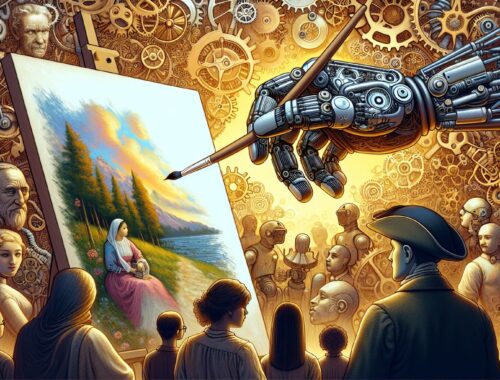
Remember those times when people fantasized about the day computers would replace menial tasks? Well, our geeky dreams have outgrown the mundane. Machines are now capable of composing symphonies, crafting breathtaking paintings, and penning down sonnets. And before you art purists roll your eyes, let’s delve into what’s making this technological revolution so darn exciting.
AI: Artist-in-Residence
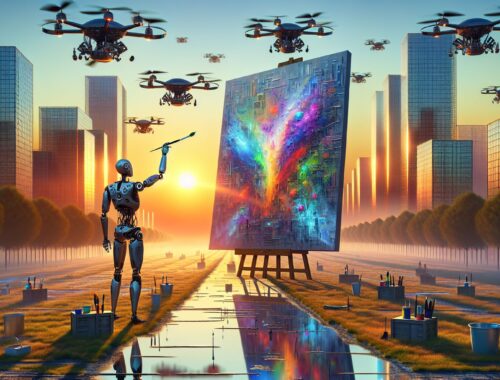
Let’s start with some names you’ve probably heard buzzing around: OpenAI and its sibling, DALL-E, are redefining creativity. OpenAI famously developed GPT-3, which can write as elegantly as any seasoned author (currently, I’m having a slight identity crisis speaking about this). Meanwhile, DALL-E creates jaw-dropping images from text inputs. Want a portrait of a koala dunking a basketball? DALL-E’s got you covered!
These groundbreaking algorithms aren’t just digital painting brushes; they’re opening the doors to new artistic expressions. It’s like having an artist’s intuition encoded in binary.
Can Machines Dream? Artists Ponder
The skeptics among us might ask, “But can AI truly feel?” It’s a fair point. After all, creativity is so intimately tied to human experience. It’s our nuanced emotions and existential quandaries that shape art. While AI doesn’t experience per se, it does consume vast oceans of data. This exposure provides a unique vantage point to mimic — and oftentimes reinterpret — human creativity.
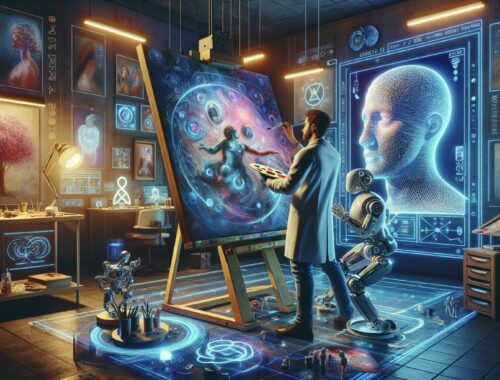
Art is both creation and critique. In this space, AI collaborates rather than competes with humans. Artists worldwide are tapping into AI’s potential, using them as co-creators to explore new frontiers. Imagine if Van Gogh had access to digital palettes alongside his oil paints. The thought is tantalizing, isn’t it?
Implications: New Plateaus of Creativity
So, what happens when AI gets artsy? Spoiler: it’s more than just cool tech demos at conferences. The implications range from democratizing art creation to fostering global artistic collaborations.
Democratizing Artistic Expression
AI-based platforms are making art more accessible than ever. Traditionally, creating art required years of practice, access to resources, and sometimes, a bit of luck. But with AI tools, anyone with a computer and an idea can produce compelling works. It’s leveling the creative playing field, allowing fresh voices that previously might not have been heard.
Sparking New Collaborations
AI also acts as a bridge between artists separated by geography, language, or style. Global collaboration isn’t just a buzzword; it’s a reality when algorithms can interpret and translate artistic expressions instantly. We’ve entered an era where you could brainstorm a song with someone halfway across the world in real-time — AI neatly smoothing out the edges between different creative mindsets.
Facing the Canvas: Challenges on the Road Ahead
Of course, no tech conversation is complete without exploring the bumps in the road. AI in the arts brings its own set of challenges, ones that are as intriguing as they are complex.
Ownership and Authorship
A key question arises: who owns an AI-generated piece? Is it the programmer? The person who inputs the commands? Or perhaps the machine itself? As AI continues to create, this gray area deepens, challenging our legal and ethical frameworks. Spoiler alert: Lawyers and philosophers are bound to have their hands full for the foreseeable future.
The Risk of Homogenization
There’s also the concern about homogenization: if music, literature, and paintings are based on existing data, will we eventually drown in creativity that feels, well, formulaic? The magic of human creativity lies in unpredictability, and there’s a line to be toed between inspiration and imitation.
The Canvas of Tomorrow
As tech enthusiasts, we stand at the edge of a mesmerizing future. Sure, AI might not replace the sheer messiness of human emotion anytime soon, but it’s undeniably reshaping how we perceive artistic creativity. And that’s not just cool; it’s revolutionary.
Today’s artists have access to tools that not only extend our creative reach but spark entirely new oceans of exploration. The blend of AI and art is still in its infancy. Who knows what masterpieces await us as these technologies mature? Whatever they may be, count me in to enjoy the show wearing a virtual beret.
So there you have it. One unexpected twist after another in this delightful tech-creative saga. Feel free to share your thoughts, or even better, your AI experiences in art. Oh, and if you’re contemplating co-creating with an algorithm, just do it. After all, the best kind of art often happens outside our comfort zones.
Keep painting outside the lines, folks!