AI in the Creative Arts: Unleashing the Imagination Machine
Hey there, tech enthusiasts! Today, I want to dive into something that’s been tickling my brain lately—AI in the Creative Arts. It’s fascinating how artificial intelligence is breaking out of its nerdy shell to waltz into the arts with a mix of flair and just a hint of chaos. So, grab your favorite cup of coffee (or tea, if that’s your jam), and let’s explore this techno-utopian frontier where silicon chips meet creative magic.
The AI Renaissance: Redefining Creativity
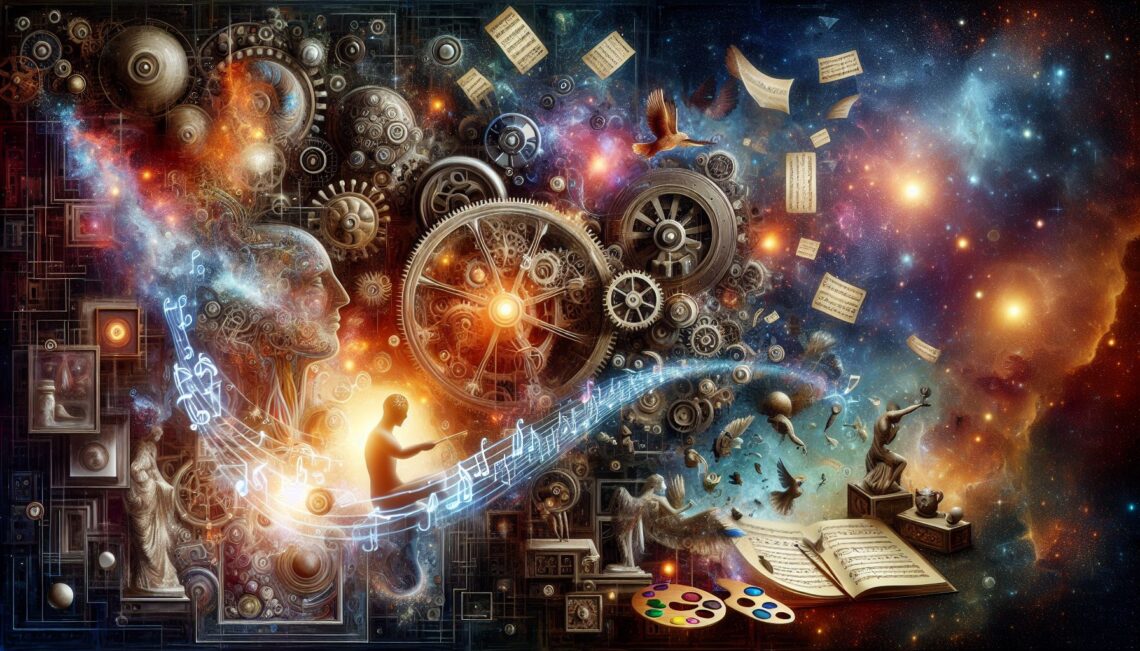
Picture this: It’s a typical morning. You wake up, brew coffee, and your AI-powered app serenades you with a personalized symphony. That’s right—we’re in the age of the AI Renaissance! Artists and technologists have teamed up to redefine what creativity means in the digital age. With AI as their brush, they’re painting a future where algorithms and imagination coexist harmoniously.
Gone are the days when AI merely crunched numbers or sifted through data. Now, it’s crafting music, painting masterpieces, and even penning poems. How, you ask? Well, through a combination of machine learning, neural networks, and a dash of digital wizardry, AI can mimic human creativity—or at least provide the sparks that ignite it.
AI Algorithms and the Art of Creation
Let’s break it down: AI and its algorithms don’t possess creativity in the traditional sense. Instead, they excel at analyzing patterns and producing novel combinations of existing ideas. Sounds a bit like plagiarism with a flair, right? But here’s the kicker—it works!
Consider AI models like OpenAI’s DALL-E, which can generate images from natural language descriptions. Want a picture of a two-headed llama lounging on a tropical beach? Done. It’s like having Picasso on demand, minus the ego and existential crises. These models have been trained on countless artworks, learning styles, techniques, and subject matter, allowing them to mimic the creative processes of human artists.
The Democratization of Artistic Expression
One of the most exciting aspects of AI in the arts is its democratizing potential. Suddenly, everyone can be a musician, painter, or poet, regardless of their technical skills. This might sound like a utopian dream—or a nightmare for seasoned artists. But let’s be real: human creativity is complex and deeply personal, and AI simply adds another layer to the creative toolbox.
Remember Bob Ross, the gentle giant of landscape painting who always insisted there are “no mistakes, only happy accidents”? That’s essentially AI in art. It opens doors for experimentation, letting novices dabble in creative pursuits without fear of judgment. It’s like handing a digital paintbrush to someone who always wanted to paint but was too afraid to make the first stroke.
Bridging the Gap: Humans and Machines in Collusion
Now, before you panic about robots taking over art galleries and Hollywood, let’s clear the air: AI isn’t here to replace human creativity. Quite the opposite—it’s here to enhance and amplify it. Imagine your trusty AI as a creative collaborator, a brainstorming buddy who never gets tired, never judges, and can process mind-boggling amounts of data in seconds.
Take for instance, the music industry. Musicians are increasingly using AI as a creative partner to explore new melodies, blend genres, and experiment with unconventional sounds. AI-generated music is like a game of musical chairs where the real winner is boundless creativity. You can create a symphony from the comfort of your room, no orchestra required.
The Ethical Quandaries: Man versus Machine
Of course, it’s not all rainbows and pixelated butterflies. There are some ethical concerns that we need to address. What happens when an AI creates something genuinely moving or groundbreaking? Who owns the rights to the work? Is it the artist who programmed the AI or the AI itself? Or should we consider the work a digital-age fluke, like a contented chimp banging randomly on a typewriter until it accidentally types a line of Shakespeare?
Moreover, as AI-generated content floods the market, will it devalue human artistry? Will the art world become a dystopian landscape where robots and algorithms overshadow human expression? These are questions worth pondering as we navigate these uncharted waters.
A Glimpse into the Future
So, what does the future hold in this quirky affair between AI and the arts? Well, I’m wagering that it looks like a collaborative explosion of creativity. As AI continues to evolve, it will become more sophisticated in understanding human emotions, sparking new artistic movements, and expanding the boundaries of what’s possible.
Imagine a world where anyone can bring their wildest creative ideas to life with little more than a thought and a digital device. Where creativity knows no bounds, and collaborations between humans and machines lead to new art forms we haven’t even dreamed of yet. It’s as daunting as it is exhilarating—a techno-utopian vision that challenges the very essence of creativity while inviting us to embrace the unknown.
Conclusion: A Beautiful Friendship
In the end, AI in the creative arts isn’t just a fleeting trend—it’s a profound cultural shift. It invites us to rethink art, creativity, and the way we express ourselves in the world. So, let’s embrace these pixelated muses, harness the power of algorithms, and watch as the tapestry of human expression weaves itself into a dazzling techno-utopia. After all, creativity is the ultimate frontier, whether embodied in flesh or code.
So, what’s your take on AI’s role in the arts? A boon, a bane, or something in between? Drop your thoughts in the comments below. Until next time, keep creating, keep dreaming, and never forget—art is meant to stir the soul, even if it’s generated by a very clever circuit board.