The Dawn of Sentient Creativity: AI in Creative Arts
Hey there, fellow tech enthusiast! Today, I want to dive into something that’s been blowing my mind lately: Artificial Intelligence in the creative arts. It’s a topic that’s equal parts sci-fi and reality, and it’s sparking some serious conversations in the tech world. So grab your virtual artist beret and let’s explore this fascinating frontier!
The Rise of the Machine Muse
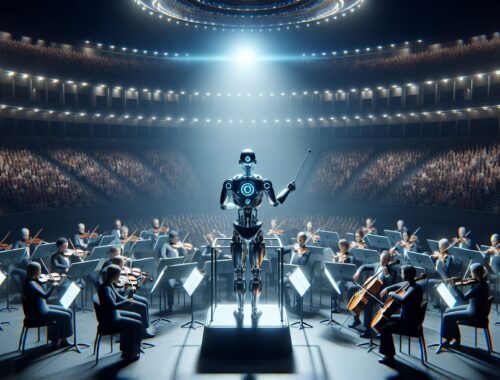
Artificial Intelligence has been playing a massive game of catch-up with human creativity, and spoiler alert: it’s getting pretty darn good. Gone are the days when AI was just churning out awkward Haikus or uncanny valley landscapes. Pioneering companies like OpenAI and DeepArt have been pushing the boundaries of what AI can create, leading to some seriously jaw-dropping pieces of art. From intricate paintings to classical music compositions, AI is picking up the brush—or more accurately, the algorithm—and joining the ranks of creatives worldwide.
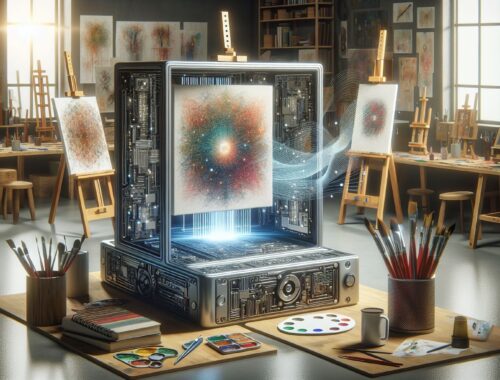
Take, for example, the groundbreaking algorithms that power OpenAI’s DALL-E, a neural network capable of generating remarkably coherent and visually stunning images from textual descriptions. Imagine typing “a futuristic cityscape under a purple sky, with flying cars and neon signs,” and voilà, DALL-E conjures up an image straight out of a cyberpunk dream. It’s like having a genie at your fingertips, except this genie is fueled by ones and zeros.
The Holy Grail of Art: Creativity or Repetition?
One of the perennial debates in the AI art world is whether machines can truly be creative. Skeptics argue that AI merely mimics existing styles and pieces, lacking the originality that defines human artistry. But here’s where I think we need to shift our perspective a bit. Yes, AI draws from vast datasets, learning from countless images, melodies, and stories, but isn’t that what we humans do too? We absorb, interpret, and then create. Maybe AI isn’t so different, after all.
Now, I won’t lie; there’s a romantic part of me that cherishes the idea of the tussled-haired artist, toiling away in their gritty studio, brush in hand. But honestly, who’s to say our electronic brethren aren’t crafting their own brand of beauty? Remember when machines took over chess? We were amazed, then we shrugged and moved the heck on. With AI in creative arts, we might be on a similar trajectory: initial skepticism, followed by acceptance, and ultimately, integration.
A Glimpse into the Future: Collaboration over Competition
So, what does the future hold for AI in the creative arts? I picture a world where artists and AI exist symbiotically. Instead of art being a zero-sum game between human and machine, we could be stepping into an era of extraordinary collaboration. Imagine musicians co-composing symphonies with algorithms that suggest novel chord progressions, or illustrators working alongside neural networks to brainstorm entirely new visual styles.
Think about the wealth of possibilities when AI becomes a tool in our hands—rather than a competitor vying for artistic supremacy. Just like the way we use cameras or computer software today to enhance our artistic abilities, AI could become another extension of our creative toolkit. I’m particularly excited about initiatives that are bridging this gap. Google’s Magenta project, for instance, is all about using machine learning in artistic pursuits, aiming to develop new ways for humans and computers to make art together.
Challenges and Ethical Questions
Of course, it’s not all rainbow palettes and AI-generated sunshine. There are serious ethical questions we need to tackle on this path. One major concern is attribution—who gets credited when AI produces a masterpiece? Is it the data scientist who wrote the code, the curator who fed it data, or the machine itself? And what about the risk of homogenization? As AIs learn from the same vast ocean of data, are we at risk of losing the uniqueness that makes art so special?
And let’s not ignore the potential social implications. As AI becomes more adept at creative tasks, could we see fewer opportunities for human artists? This worry isn’t unfounded, and it’s vital we consider how to balance progress with the preservation of human-centered art.
Wrapping it Up: Embrace the Renaissance
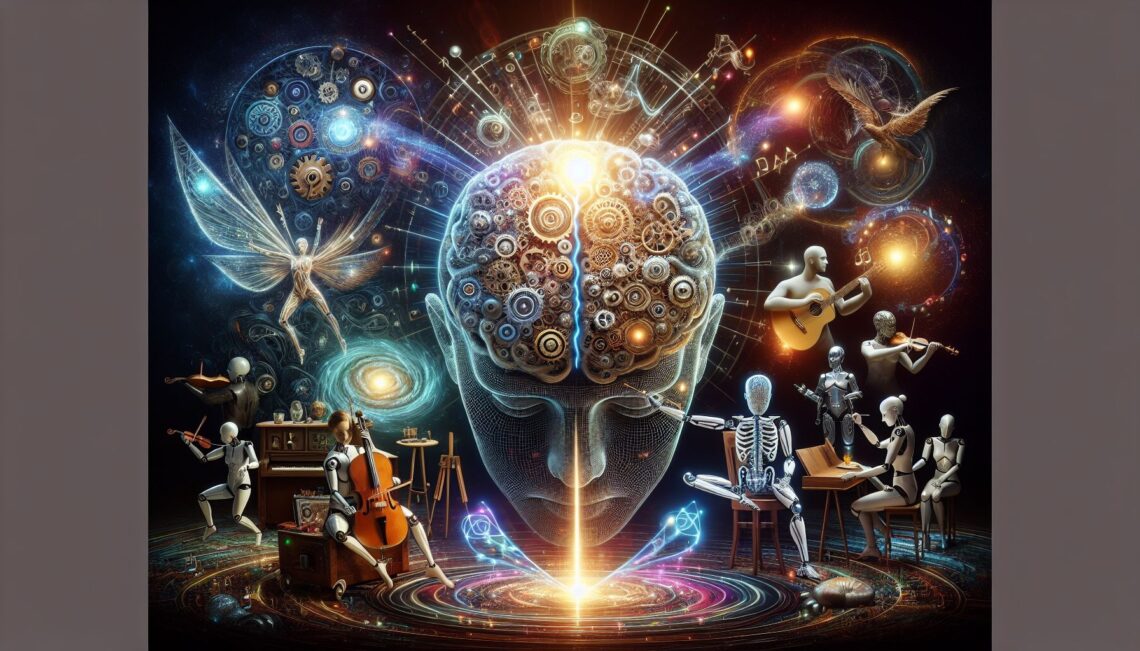
AI in creative arts isn’t just a technological leap; it’s a cultural renaissance. We’re on the cusp of an era where creativity isn’t confined by flesh and bone but expanded by silicon and code. As we welcome this new age, the key is to embrace the change with open arms and critical minds.
To me, the magic lies in seeing technology not as an enemy of tradition but as a partner in evolution. After all, isn’t art about challenging norms and redefining boundaries? Let’s celebrate what AI brings to the table and explore its full potential—as long as it doesn’t develop a taste for wearing berets and demanding credit at art exhibitions!
Thanks for tuning in today, fellow innovators. Stay creative, keep coding, and let’s march into this techno-utopian dawn together!