The Spark of Creativity: AI in the Arts
Hey there, fellow tech enthusiasts. If you’re anything like me, you’ve watched the rapid growth of artificial intelligence with an awe-infused skepticism. But today, let’s take a detour from the dystopian tales of robots outsmarting us all and dive into something a little more whimsical: AI in the world of creative arts. Get your virtual paintbrushes ready, because this is going to be a colorful exploration of how our silicon companions are carving out niches in areas we once thought uniquely human.
Artistry Meets Algorithms
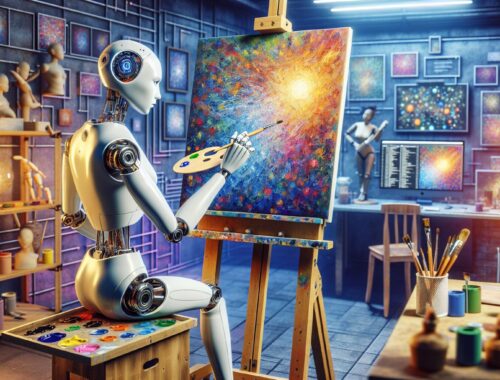
Once upon a time, art and technology were considered polar opposites, much like cats and water. Artists wielded brushstrokes while technologists debated ones and zeroes. Now, we live in an era where AI models can paint, write symphonies, and even craft poetry. The digital Mona Lisa, if you will, is emerging, and I couldn’t be more fascinated.
The Rise of Neural Networks in Art
Since when did algorithms start growing creative backbones? Well, you can thank neural networks for that—a technology inspired by the complex web in our noggins. These systems, specifically Generative Adversarial Networks (GANs), are making headlines lately. A GAN cleverly pits two algorithms against each other; one creates, the other critiques. The result? Astonishingly lifelike creations that, dare I say, could make even Van Gogh raise an eyebrow.
Take the example of Google’s DeepDream, which turned headshots into surreal dreamscapes. Or consider how OpenAI’s DALL-E has revolutionized image generation, producing whimsical and detailed images from textual prompts. It’s like asking a genie for a painting, and poof—it’s done, brushstrokes free.
AI Music Maestros
Okay, maybe you won’t be seeing Beethoven headlining Coachella anytime soon, but AI-generated music is very much a thing. Tools like Amper Music and AIVA are helping independent musicians compose without needing a multi-million-dollar orchestra. These programs can analyze vast libraries of music to blend styles and harmonies into fresh tracks. Musicians can now push creative boundaries even further, with AI doing the heavy lifting on harmonies and counter-melodies, freeing humans to focus on expression and flair.
Implications for the Arts
All this digital wizardry isn’t without its implications. If you’ve ever scrolled through Twitter and found yourself questioning, “Wait, was this written by a bot?” you’ll know what I mean. The line between human and machine creativity is blurring, but what does it mean for artists and audiences?
Democratization: Art for All
Here’s some good news: AI is democratizing art creation. With tools like Artbreeder enabling anyone to mix landscapes or portraits without a canvas, art is becoming more accessible. Aspiring artists no longer need a decade of grueling atelier training or costly supplies to create something beautiful. Imagine a world where every child with a computer can turn imagination into creation. This could be that world, my friends.
A New Artistic Era or a Loss of Skill?
On the flip side, some folks wonder if AI will replace traditional artists, phasing out the cherished skills from Michelangelo’s time. While AI offers speed and efficiency, the warmth of human touch carries an irreplaceable value. The nuances of a pianist’s touch or a painter’s brushstroke—these come from years of learning and the complex tapestry of human emotions. We shouldn’t worry about AI replacing artists; rather, see these evolving tools as companions on the creative journey.
Intellectual Property: Who Owns What?
AI’s rise brings a gnarly legal beast: intellectual property. If a neural network produces an artwork that sells for millions, who pockets the dough? Companies have faced this quandary, and legal analysts are pulling their hair out exploring the implications. It’s a burgeoning legal landscape, a jigsaw puzzle with half the pieces still invisible. Until resolved, we may end up with more lawsuits than canvases.
The Future of AI in Art
Ready for some speculative crystal-ball gazing? The future of AI and art looks excitingly vibrant. We’re entering an age where artists could collaborate with AI artists—literally mixing human and machine inputs for superhuman results.
Personalized Art Experiences
Imagine an interactive art exhibition tailored just for you. AI could analyze your preferences, likes, and social media habits to curate an art tour that resonates with your unique tastes. A museum that adapts in real-time, offering you a personalized experience like no other virtual gallery could achieve. Crazy or cool?
Fostering Creativity
AI could become an artist’s muse, suggesting fresh ideas and motifs that spur creativity. Imagine receiving a daily “creativity spark”—inspired concepts you’d never think of on your own. In a sense, AI could end up being the creative assistant that pushes you out of your comfort zone, the electric jolt your muse sometimes needs.
Conclusion: A Brave New Art World
To wrap it up, AI in the arts is a game-changer. By amplifying creativity and offering novel tools for expression, AI is helping spread the art bug far and wide—from seasoned professionals to curious novices equipped with little more than a laptop.
As we venture into this brave new art world, remember the ultimate masterpieces, forged with human spirit and technological innovation, are still snuggled warmly in our imaginations. Because, at the end of the day, isn’t it the joy of creation and discovery that makes art—and technology—so addictive?
Well, that’s my two cents on AI and the arts. Whether you’re an artist or simply an appreciator of creative alchemy, let’s keep our minds open and our judgments (a little) suspended. The next canvas AI completes might just be your new favorite masterpiece. Happy creating, digital wanderers!