Unleashing the Next Wave: AI in the Creative Arts
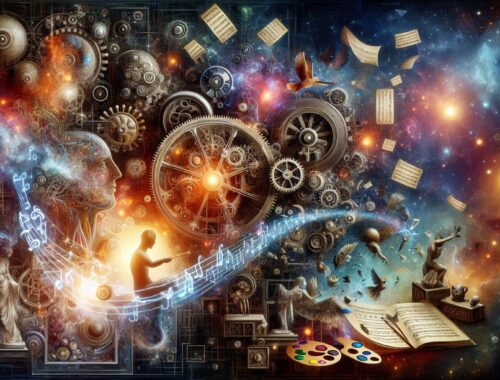
Hey friends! I hope you’re as pumped as I am about the fascinating ways artificial intelligence is shaking things up in the creative arts. It’s one of those topics that just makes you sit back and think, “Wow, the future is now!” Today, I’m going to dive deep into how AI is not just a tool, but rather a partner in the creative process, opening doors to new possibilities and pushing the boundaries of art like never before. Grab your favorite coffee or tea—this is gonna be a fun ride.
The Dawn of an Artistic Revolution
So, what got me really hooked on the idea of AI and creativity was seeing what DALL-E, MidJourney, and their AI art companions were doing. I mean, who would’ve thought computers could create mesmerizing landscapes or portraits that move from realism to abstraction in one stylish brushstroke? These AI models are essentially Gutenberg Press v2.0 for the arts, allowing anyone to “print” their imaginative visions with just a few text prompts. Trust me, we’re witnessing history in the making.
From Paintbrushes to Pixels
Let’s start where it all began, with visual arts. Traditional art has been about canvases and paintbrushes for millennia, but with AI jumping into the mix, we’re seeing an explosion of creative possibilities that were purely sci-fi a decade ago. These AI models are trained on vast datasets of art history, recognizing patterns and styles that span centuries and cultures. So when you feed them a bizarre prompt, like say, “cats flying over a neon Tokyo skyline,” you end up with something that feels both familiar and brand new.
But it’s not just about creating bizarre images for a quick laugh. AI is also helping artists refine their own, human styles. Think of it as having a collaborative partner who helps brainstorm ideas, suggesting lighting, composition, colors, etc. It’s not here to replace artists but to augment their abilities—a.k.a., the Iron Man suit for your creativity!
Music to Our Ears: AI and Sound
Moving on to sound, music might be one of the most personal forms of art out there. It’s emotional, complex, and deeply human. Or is it? More and more, we’re seeing AI play a pivotal role in how music is composed, performed, and even understood. Systems like OpenAI’s Jukebox are generating complete tunes in different styles, from Beatles-esque rock to Billboard-topping pop, without breaking a sweat.
Algorithms Rocking the Grammy Stage
Before you eye-roll at the thought of robots taking over the Grammy Awards, think about this: AI-driven platforms don’t aim to steal the spotlight. They’re helping musicians experiment without the limitations of technical skill or studio capabilities. Let’s imagine a guitarist who can hum a riff. With the power of AI, they could hear that riff realized by a virtual orchestra or have it extend into a full song—no formal music training required. How’s that for empowerment?
And wait, there’s more. AI is also lending a hand (or a gear?) in music analysis. Streaming services are using AI models to analyze new releases for elements that resonate with listeners, tailoring playlists to our moods and uncovering lesser-known artists who might just become the new global obsession. It’s the ultimate A&R specialist, just minus the record label’s politics and bureaucracy.
Writing Beyond Words: AI and Literature
Alright, time for my personal favorite! The written word is where AI’s entry has stirred the most conversation—and some controversy. AI models like GPT-3 are writing articles, scripts, even poetry. I mean, who would’ve thought we’d reach a point where we can have literary conversations with algorithms?
Plot Twists and Page Turns
One of the coolest features of AI in literature is its role as a co-author or brainstorming buddy. Authors are turning to AI to overcome writer’s block or to experiment with different narrative styles. Saying, “Hey GPT-3, what happens next?” opens up a world of unpredictable yet fascinating storylines. AI can produce suggestions that even the most creative human minds might overlook, injecting fresh ideas into traditionally formulaic genres.
Moreover, educators are now envisioning a future where AI could co-teach creative writing, providing real-time feedback and offering suggestions to budding authors on how to develop their voice and structure their stories. It’s an encouraging sign of educational innovation—not to mention a potential game-changer in making writing more accessible.
The Inevitable Skepticism
Of course, with every great technological disruption comes an equal and opposite wave of skepticism. Some purists argue that AI-generated art lacks the human touch or the emotional depth we crave from creative works—and they’ve got a point. Critics worry about issues of originality and ownership, not to mention the big elephant in the room—could AI creativity eventually overshadow human talent?
Facing the Critics with a Smile
While these concerns are valid, I believe we’re on the brink of something collaborative rather than competitive. For now, AI is more of a promising apprentice than a prodigy maestro. It frees artists from tedious tasks, allows them to experiment without fear of failure, and pushes human creativity to new heights. If anything, we’re developing a symbiotic relationship with technology where our combined output could turn into the next Renaissance—an AI Renaissance!
Imagining the Creative Future
So, what’s next for AI in the creative arts? Well, picture this: you walk into a room, sensors detect your mood swings, and voilà! Personalized art installations materialize around you—a multisensory experience curated by AI. Or, imagine hyper-realistic AI actors performing in live theater, sharing the stage with humans to create immersive narratives audiences have never seen before.
I can’t wait to see what the future holds when true collaboration hits its stride, resulting in works that neither humans nor machines could create alone, but only together.
What are your thoughts, tech enthusiasts? Are you ready to brush shoulders with your AI co-worker in your creative processes? Let me know in the comments section how you see AI impacting the arts. Here’s to the possibilities that lie ahead! 🎨🎶📚