The Art of Machines: How AI is Shaping the Future of Creative Arts
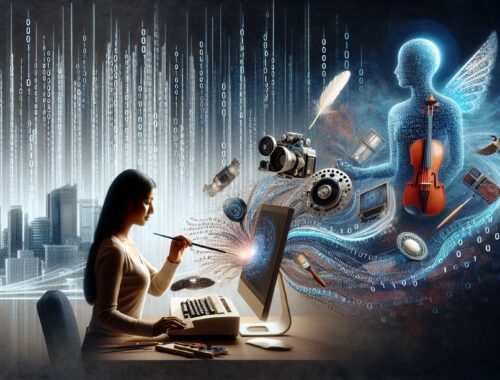
Hey there, fellow tech enthusiasts! Today, I want to talk about something that’s got me really jazzed up lately—Artificial Intelligence in the creative arts. It’s a topic that would get any art-loving techie excited. Imagine a world where AI not only does your homework or your taxes but also composes symphonies or paints like Picasso! Stick with me, and I’ll take you on a journey into how machines are tackling creativity and what it means for our artistic futures.
A New Canvas
AI has been making a lot of waves in the creative sector, and it’s not just about making crappy knock-offs of Mona Lisa. We’re in an era where it creates art that’s so compelling that even seasoned art critics are scratching their heads. Take, for instance, the art piece called “Edmond de Belamy,” auctioned in 2018. Created by an AI under the collective called Obvious, it sold for a jaw-dropping $432,500. Yep, you read that right! Now, before you start thinking that’s a fluke, let me assure you, it’s just the tip of the iceberg.
Algorithms as Artists
So, how does an algorithm become an artist? Well, it all starts with something called Generative Adversarial Networks (GANs). In layman’s terms, these babies are like two nerdy artists having a face-off. One creates an image, and the other judges it like Simon Cowell at a talent show. It keeps going till the output is not just good, but genius-level good. This continuous learning cycle has enabled AI to not only replicate existing art styles but create entirely new forms that only a hyperactive human imagination could concoct.
Democratizing Creativity
But let’s take a beat here and ask, what does this all mean? Personally, I think we’re standing at the brink of a major democratization of art. Here’s why.
From Starving Artists to Thriving Algorithms
Traditionally, the art world has been somewhat elitist. Old masters, inherited techniques, and a “you have to starve before you succeed” mentality made it seem like the Sistine Chapel ceiling was never something the average Joe could replicate. Enter the world of AI. Suddenly, anyone with a computer and a dash of curiosity can become an artist overnight. If you’ve ever played with apps that transform your photos into works of art in different styles, you’ll know what I’m talking about. With the power of AI, the barriers to entry shrivel away, allowing creativity to bloom in places you’d never expect.
Infinite Inspiration
Now, with AI in the mix, the range of creative output is mind-boggling. Artists no longer have to dig through the dusty annals of art history for inspiration; they can simply consult an AI. In fact, I’ve dabbled a bit myself! Last month, I used a neural network to generate some “futuristic landscapes.” In a matter of seconds, it spit out a series of images that left me both fascinated and a little disoriented. It’s like having a collaboration partner who never sleeps and is never short of ideas.
Challenges and Ethical Quandaries
Hold on—it’s not all sunshine and rainbows. Like any good plot, this story has its share of ethical dilemmas and challenges.
Who Gets the Credit?
One big question that comes up is: Who’s the real artist here? Is it the person who wrote the algorithm, the AI itself, or the guy who pushed the ‘generate’ button? There’s already a bit of a turf war brewing. Companies like OpenAI, renowned for their work in machine learning, have sparked debates on the intellectual ownership of AI-generated content. As AI continues to evolve, this debate is only going to get spicier.
The Walmart Effect on Art
And what about originality? If AI becomes the Picasso of the digital world, where does that leave human artists? There’s a lurking fear that easy access to AI-generated art could devalue human-made ones, akin to how mass-produced goods changed the craftsman landscape. While some argue AI can enhance human creativity rather than replace it, there’s a cautious undercurrent among traditionalists. It’s like the Walmart effect but for art—more art for everyone, which is great, but it can also rip the bottom out of markets for human artists trying to etch out a living.
The Road Ahead
I dunno about you, but I’m both excited and a bit wary about what’s coming up next. What’s certain is that AI is reshaping the landscape of creative arts, for better or worse.
Speculating the Future
Looking forward, I envision partnerships between humans and algorithms becoming mainstream. Imagine walking into an art gallery and interacting with pieces designed by both humans and AI, each contributing their own strokes, either digital or physical, to make something extraordinary. And why stop there? With big tech giants and startups both hopping on the AI creativity train, we’re bound to see developments even my geeky brain hasn’t dared to dream up yet.
Closing Thoughts
So there you have it, folks. AI in the creative arts is no longer a pipedream; it’s here, it’s amazing, and it’s challenging the way we perceive creativity itself. Whether you see this as a renaissance or a disruption, there’s no denying its transformative impact. Imagine the possibilities, ponder the pitfalls, and maybe, just maybe, fire up an app and create something yourself. Who knows? Your next creative partner might just be an algorithm.
‘Til next time, stay curious and keep those imaginations running wild!