The Dawn of Mindplay: AI and the Renaissance of Human Creativity
Greetings, fellow tech enthusiasts! 🖖 I’m absolutely thrilled to dive into one of the most captivating intersections of technology and art today — the explosion of AI in the realm of creative arts. Buckle up as we explore how machines are pouring fuel on the creative fires of humankind, potentially launching us into a new era of artistic renaissance! 🎨🤖
The Algorithmic Brush: AI in Visual Arts
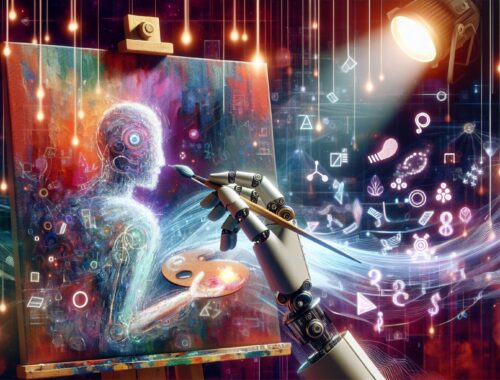
Let me start with an exciting personal anecdote. A few months back, I stumbled upon an art exhibit showcasing pieces generated entirely by neural networks. Imagine walking into a gallery expecting the usual brush-stroke marvels and being greeted by a breathtaking array of digital masterpieces, each glowing with a shimmering aura of otherworldly charm. No, it wasn’t created by the hands of a master painter, but rather an elegantly coded symphony of algorithms.
AI Artists: From Doodles to Masterpieces
Remember when AI was just about recognizing cat videos on the internet? Those days are quaint memories now. Today, algorithms like GANs (Generative Adversarial Networks) are behind creating everything from abstract artwork to impressively realistic portraiture. OpenAI and collaborators have pushed the boundaries, creating “artist” AIs that can sketch, paint, and even mimic the styles of van Gogh and Monet with uncanny precision. It’s like giving your toddler a crayon and watching them scribble a Picasso during nap time.
Art communities are buzzing with debates: What now constitutes art? Is the soul of a painting its creator or its creation? While traditionalists might balk, this tech infuses art with fresh gusto. Who knew binary code could ignite such colorful debates? 🎨🤔
Symphony No. AI: The Musical Serenade
Right alongside the visual spectacles, AI is also striking chords in the music industry. Remember the first time you heard about computers composing music? We’ve evolved leaps and sounds since then.
Composing Companions: Partnering with Algorithms
Take a gander at projects like Google’s Magenta, harnessing the immense potential of machine learning to compose, improvise, and accompany musicians live. The point isn’t to replace human creativity but to augment it in complex, inspired ways.
A friend of mine, who’s a semi-professional musician, recently collaborated with an AI tool on a track. Listening to him describe the experience was fascinating: “Playing with AI is like having a jam session with someone who knows every musical genre ever — a buddy who’s always in tune, never late, and has killer music theory skills.”
Artists find partners in these digital comrades that challenge them to step beyond traditional boundaries, resulting in compositions that were previously inconceivable. The blend of human emotion and AI logic truly creates compositions fit for an Emmy, or at least the theme song for a really cool sci-fi series!
Writing the Future: AI Scribes at Work
I bet some of you are thinking, isn’t there a bit of irony in AI writing about AI? Well, touché! Alongside painting and music, literary arts are also seeing AI’s creative footprint.
Automated Authors: From Scripts to Short Stories
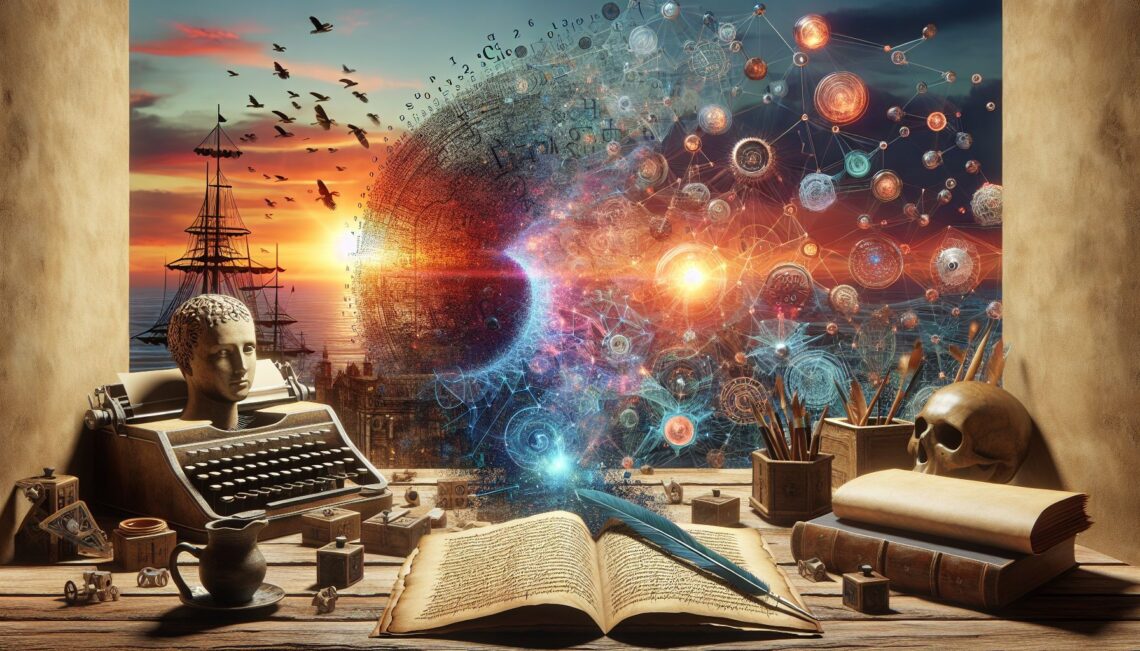
AI wordsmiths, like those developed by folks at OpenAI, are collaborating with writers to pen everything from news segments to novels. While it may not yet wield the prowess of Shakespeare, these tools offer writers structured creativity, aiding in plot outlines, character creation, and even linguistic style shifts.
Some skeptics fear AI novels might flood the market, but I’m optimistic that true craft will always stand out, with AI providing a form of “literary exoskeleton” that enhances the human imagination. And who knows, maybe AI will teach me the secret to writing bestselling thrillers that I’ve been gnashing my teeth over for years! 🤫📚
The Ethical Canvas: Challenges and Considerations
Of course, the rise of AI in creative arts is not without friction. Intellectual property concerns hang like a specter: who owns the art created by AI? The coder? The user? Or is it the AI getting a sweet royalty cut? 💸
Also, the fear of job loss extends to artists and creatives, echoing familiar industrial woes. Yet history reminds us that technology tends to create more jobs than it destroys, evolving the landscape rather than flattening it.
Then there’s authenticity. We must ask ourselves, does the human touch matter when an AI can replicate emotion so vividly? This debate is both philosophical and practical, requiring a careful balance between harnessing the benefits and retaining our uniquely human flair.
The Grand Canvas: Looking Ahead
As AI continues to mature, its role in art will likely oscillate between a collaborator, a tool, and even an innovator. The stories and experiences it enables will continue to challenge, amuse, and inspire us in unimaginable ways.
Imagine the thrill of creativity liberated from the physical limits of our mortality. Instead of the artist fading away, their unique blend continues to evolve, grow, and create — their legacy a true echo, symphony, or painting swirling through eternity. Simply put, the sky isn’t the limit; it’s the launchpad! 🚀
So, dear reader, as we march on into this brave new world, let us hold hands with our silicon brethren and dance on this grand cosmic stage. May our creative endeavors continue to flourish in ways our forebears could only dream of. 🌌
Until next time, keep dreaming big and coding smart. Cheers to the artistry of tomorrow. 🍻