AI’s Creative Renaissance: Transforming Imagination with Algorithms
Hey tech lovers! Today, let’s dive into something super exciting—Artificial Intelligence in creative arts. 🎨 It’s almost as if AI has taken a leap from the lab into the studio, and the results are nothing short of mind-blowing. If you’re thinking, “AI? In art?” you’re not alone. But trust me, once you see what’s happening, you might just feel like me—slightly awed, a little curious, and totally pumped.
So grab your favorite beverage and let’s explore this fascinating fusion of code and creativity.
The Unexpected Artist: AI’s Entry into the Creative Space
When you think of AI, you might think about its ability to crunch numbers, predict weather, or even help your car drive itself. But paints and canvas? Not the first things that come to mind, right? Yet here we are.
AI isn’t just dipping its mechanical toes into art; it’s doing a cannonball. From generating paintings that rival the masters (ever heard of AI artist Botto?) to composing music that sounds like it was beamed straight from Beethoven’s brain, AI is redefining creativity.
Why the crossover, you ask? First off, AI has gotten pretty good at understanding patterns—colors and shapes in visuals, for instance, or chords in musical compositions. So, by training AI on centuries of artistic work, it’s sorta like handing it a complete toolkit of creativity. And the results can be just as charming or deeply eerie as any human artist’s work.
Bringing Code to Canvas: How It Works
Skeptics might mutter “It’s just a machine!” But here’s where it gets juicy. At the heart of AI art generation are neural networks—a bit like little digital brains. These can learn by example and mimic creative processes.
Generative Adversarial Networks (GANs): Here’s the secret sauce. GANs are essentially two neural networks that duke it out. One generates art, while the other critiques it. This back-and-forth makes the generated output surprisingly compelling. It’s like having an artist and a snooty art critic locked into a creative tango.
DeepDream and Style Transfer: There’s also DeepDream, AI’s way of having a surreal dreamscape, and style transfer, where AI combines the style of one image with the content of another. Imagine Van Gogh painting your vacation photos. Wild, huh?
Real World Hits: From Galleries to Gram
Now, before you dismiss AI art as a gimmick, consider this: In 2018, an AI-generated portrait titled “Portrait of Edmond de Belamy” sold for $432,500 at Christie’s. And that’s not an isolated splash. AI art is making waves across galleries around the world.
Instagram and social media platforms are flooded with AI-driven filters and creative tools allowing people to ‘Rembrandt’ their selfies or create landscapes with the whimsy of Monet. It’s like having an art studio in your pocket, powered by algorithms.
AI Music: When Machines Rock
Can machines make music that moves us? You bet your binary! From pop songs to symphonies, AI is generating tracks that aren’t just coherent but catchy. Companies like OpenAI have been pushing the envelope with models like Jukedeck and MuseNet, exploring compositions across genres.
My own playlist? It’s got some AI-generated tunes that genuinely make me sway—though I’ll admit, the irony of singing along to something made by a machine isn’t lost on me.
Challenges and Critiques: Art without the Artist?
Now that we’re feeling all euphoria over AI’s newly found creative soul, let’s tackle some nitty-gritty. A lot of artists are excited about AI as a tool, but there’s concern too. AI might reproduce or amplify existing art styles without truly innovating.
And then there’s the existential question—is art born out of emotional experiences or can algorithms, devoid of feelings, produce something genuine? What happens when art doesn’t spring from the human consciousness?
The Future of AI in Art: Collaboration or Competition?
Here’s where I get to play futurist for a moment. I can see AI evolving to become an artist’s muse, a collaborator rather than a competitor. Imagine a world where artists and AI work hand-in-hand, each influencing the other, creating works neither could achieve alone.
Artists might use AI to sketch preliminary outlines or suggest chord progressions, iterating faster than ever. As with any tool, it’s all about how you wield it.
Wrapping It Up
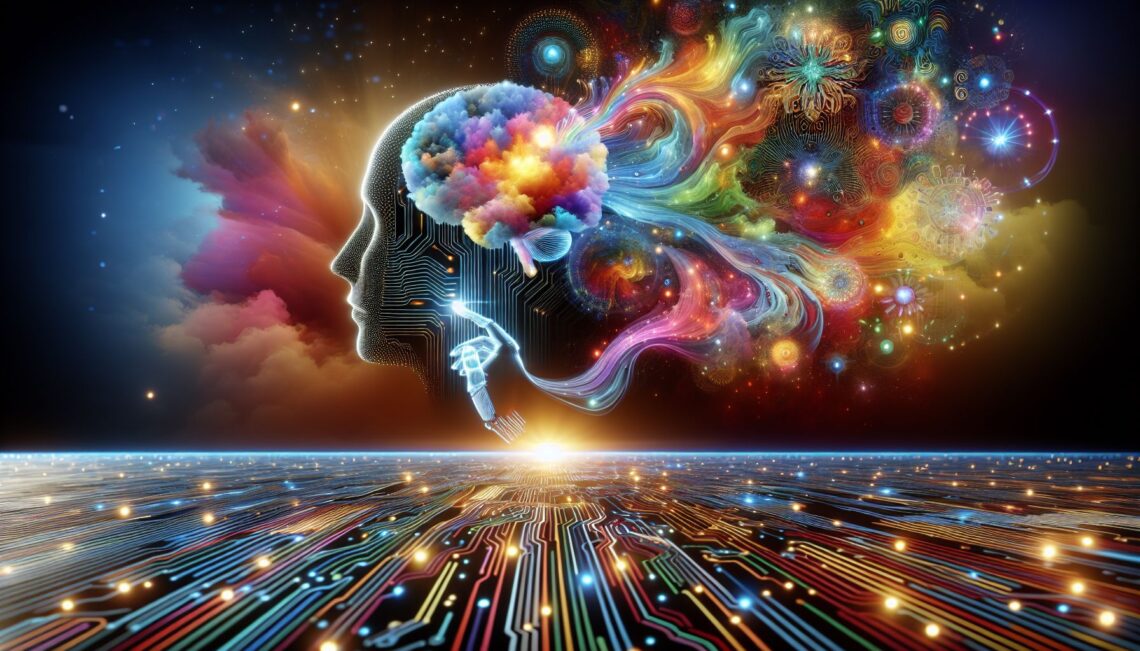
AI in creative arts is a colorful frontier at the intersection of technology and imagination. Where it’ll go next is anyone’s guess, but one thing’s for sure—it’s pushing boundaries and sparking debates about the essence of art itself.
Until next time, stay curious and maybe give an AI art app a spin. Who knows, you might just create the next big masterpiece. What can I say—living in the future is hella cool! 🚀
Feel free to ping me with your thoughts or share what AI-creativity adventures you’ve embarked on. I love geeking out with you. Until next time, keep dreaming, and maybe throw a little code into the mix. Cheers!