The Exciting Frontier of AI in Creative Arts: Where Algorithms Meet Expressions
Hello, fellow tech enthusiasts! Today, I want to take you on an intriguing journey into the artistic side of artificial intelligence. Yep, you heard me right! We’re diving deep into how AI is shaking things up in the world of creative arts. From generating mind-blowing artworks to composing symphonies that can make Beethoven nod in approval, AI is proving it’s not just a genius number-cruncher, but also quite the creative whiz.
So grab your favorite drink, kick back, and let’s explore this captivating intersection of technology and creativity.
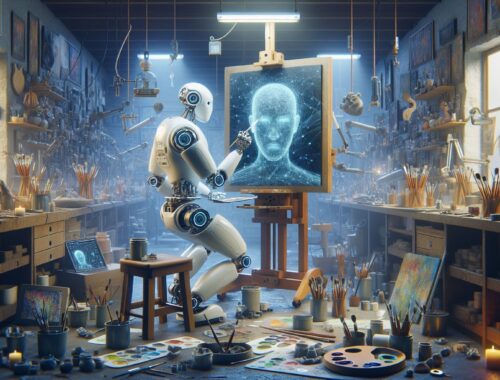
AI: The New Picasso on the Block
Now, when you hear AI and art in the same sentence, you might think, “Can a bunch of algorithms really be an artist?” Surprisingly, the answer is a big, enthusiastic yes! In recent years, AI has begun creating original works of art that are being showcased in galleries and auctioned for jaw-dropping sums.
From Code to Canvas
Let’s start with a bit of history. The whole AI-art love affair kicked off in earnest around a decade ago when a bunch of enthusiastic developers and artists began combining their talents to see what would happen when machine learning algorithms met canvas. The result? Pretty darn impressive.
Consider the renowned painting “Edmond de Belamy” generated by a machine learning algorithm designed by the Paris-based collective, OBVIOUS. This particular piece fetched a whopping $432,500 at a Christie’s auction in 2018. The staggering price wasn’t just for the artwork itself but for the statement it made — AI had arrived in the world of fine arts.
Algorithms as Brushes
But how exactly do these intelligent machines create art? They use something called Generative Adversarial Networks (GANs). Picture GANs as two AI artists engaged in a friendly rivalry — one generates the art, and the other judges it. They keep refining their work, nudging each other towards perfection. It’s like a techy version of Bob Ross critiquing his own happy little trees! The result: beautiful, and sometimes eerily human-like artworks.
Music, Maestro, Please!
Just when you thought AI was content with painting, it’s out here composing symphonies and pop bangers like it’s got Mozart and Max Martin working together in its data core.
Machines That Rock
These days, AI isn’t just making noise, it’s crafting music. Take compositions by OpenAI’s MuseNet and Jukedeck (acquired by another tech giant) which can produce music in various styles ranging from classic to jazz and beyond. Companies like Amper Music are even allowing artists to collaborate with AI, providing musicians with tools to compose and customize their own music.
I remember stumbling upon an AI-composed piece that sounded like a lost track from a 90s grunge band. It was eerie but also kind of thrilling. The fact that AI could capture the nuances of a genre and deliver something fresh and authentic was incredibly exciting.
Soundscapes of Tomorrow
Of course, AI in music isn’t limited to merely churning out tracks. It’s working with artists to experiment with sound and push the boundaries of what we know as music. Imagine a near-future concert where you’re not just a passive listener, but the music changes in real-time reacting to the mood and energy of the crowd. It’s a techno-utopian dream waiting to unfold.
Words, Rhythms, and AI as Poets
Right, so we’ve talked visuals and sound, but what about the written word? How does our beloved AI perform in the realm of poetry and prose? Well, it’s not all haikus and sonnets, but AI has certainly taken giant steps into literary creativity.
Penning Poetry with Precision
Check out “The Policeman’s Beard is Half Constructed,” a collection of poems and musings from the 1980s credited to Racter, one of the world’s first computer programs to write creatively. Fast-forward to today, and we’ve got GPT models churning out everything from quippy short stories to complex narratives that rival seasoned novelists.
It’s fascinating to see AI tackle the intricacies of language, using its vast database to not only play with words but infuse them with meaning and emotion. I admit, I once challenged a language model to write a limerick about programming, and the result was far more moving than I’d care to confess.
Why It Matters
At this point, some of you might wonder what all this means for human creatives. Is it the apocalypse for artists, musicians, and writers? Not likely. On the contrary, AI is becoming a tool that enhances human creativity rather than supplants it.
Collaboration over Competition
AI offers artists new mediums and methods for expression — it’s more a collaborative muse than a competitor. Think of AI as a fellow band member who’s a sort of genius, never sleeps, and is always up for a jam session. The technology helps automate mundane tasks and allows creators to explore ideas that might be beyond human capability alone.
The Democratization of Creativity
By reducing barriers to entry, AI is also democratizing art and music production. Fancy composing an orchestral piece or designing video game landscapes with zero experience? With AI tools, you’re able to experiment and create with unprecedented freedom and ease.
A Glimpse into the Future
If we gaze into our techno-crystal ball, we can spot some fascinating potentials and challenges. AI is showing no signs of slowing down, opening up realms previously constrained by human imagination and ability.
A Double-Edged Paintbrush
Of course, as with all tech, it’s important to acknowledge the ethical and social implications. Concerns over originality, authorship, and the potential loss of human touch are ongoing debates. But as with any groundbreaking evolution, understanding and shaping its development responsibly is key.
The Creative Renaissance
On the flip side, imagine a world where AI-powered creativity leads to a cultural renaissance. Artists equipped with such technology might lead the charge towards new forms of expression, experiences, and entertainment.
In conclusion, the union of AI and creative arts is a promising venture into uncharted territories. It’s inviting us to rethink and redefine what creativity looks like in a digital age, offering tantalizing glimpses into not just how our art is created, but how we understand and connect with it.
So, fellow techies and art aficionados, let’s keep our eyes peeled and minds open as we witness this otherworldly concert of bytes and brushstrokes unfold. Let today’s algorithmic Picasso be the brushstroke to a masterpiece of tomorrow.