Unveiling the Future: AI and the Artistic Chessboard
Hey there, tech enthusiasts and future-savvy readers! You might wanna grab a cozy chair and settle in because today, we’re diving into the mesmerizing world where technology meets creativity. We’re talking about none other than Artificial Intelligence in the Creative Arts. Yep, you read it right—AI is no longer just the whiz kid calculating your credit score or piloting Mars rovers. It’s now making a grand entrance onto the creative stage, and let me tell ya, it’s nothing short of spectacular.
The Convergence of Art and Algorithms
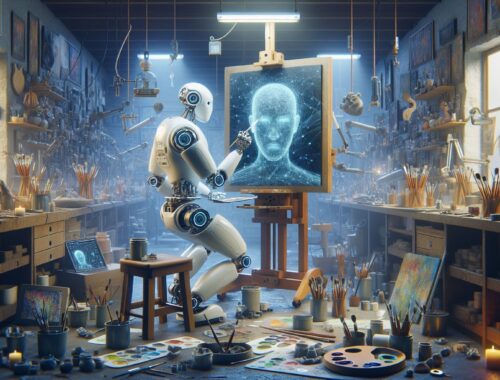
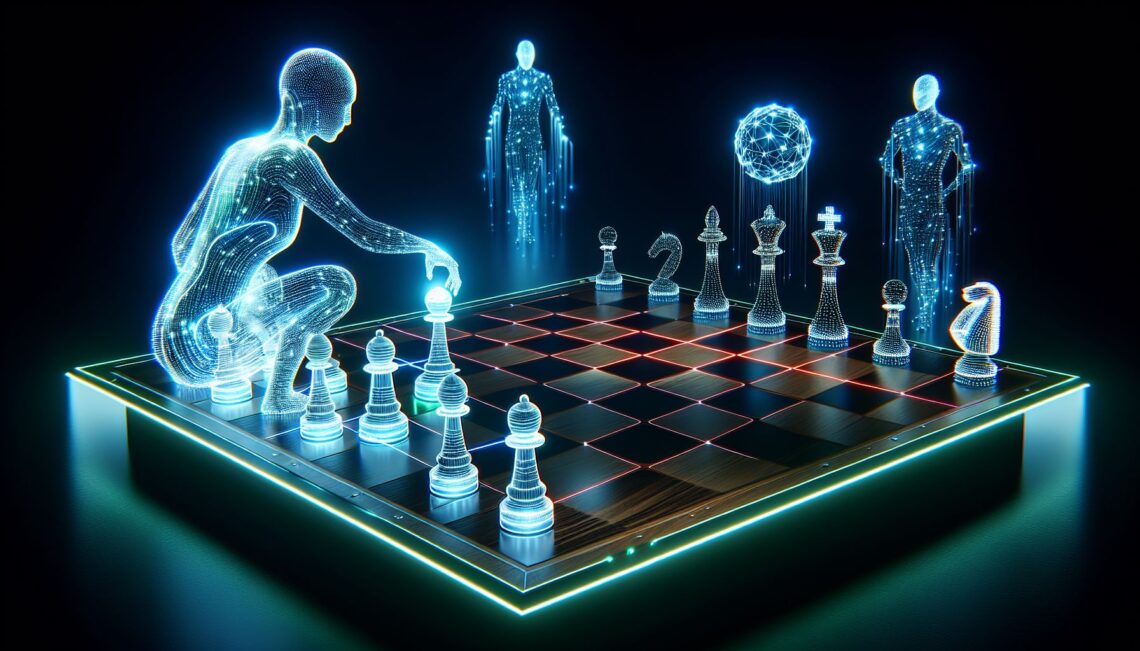
So, here’s the thing about AI: it’s gotten super smart. We’re at a point where AI is not just a passive tool but a participatory player on the artistic chessboard. Remember when Siri struggled to understand your accent? Those days are long gone. Today’s AI can compose symphonies, create visual art, and even write short stories. It’s almost like having a burgeoning Van Gogh or Hemingway but without the existential crises. Welcome to the era of techno-utopia!
AI’s Creative Canvas
You might be thinking, “AI in art? How’s that even legit?” Well, buckle up because this is where it gets fascinating. Companies like OpenAI have developed models like DALL-E that can generate images from mere text prompts. Want to see a dog riding a skateboard in Times Square? No problem! DALL-E’s got your back.
But why stop at images? AI is delving into music too. And no, we’re not just talking generic elevator tunes. There’s an entire ecosystem growing around AI-generated music. Startups are springing up, using AI to craft everything from catchy pop melodies to intricate classical compositions. Imagine creating a personalized soundtrack for your life, where each note resonates with your unique vibe. It’s like living in your own movie but without the whole “aliens invade Earth” subplot.
The Creative Process Reinvented
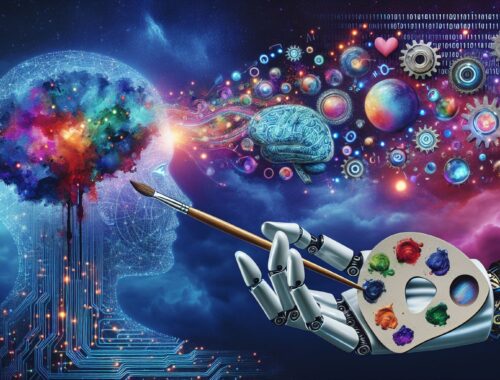
Let’s get personal here for a sec. I recently dabbed into an AI-powered painting app, and full disclosure: It blew my mind. Picture this: an interface that lets you choose styles ranging from cubism to something that looks suspiciously like modern abstract art, and in mere seconds, voilà—a unique masterpiece is born. It’s like having Picasso on speed dial, minus the hefty commission fees.
Here’s the kicker: AI isn’t about replacing human creativity. Instead, it’s enhancing it, offering tools that artists couldn’t even dream of a decade ago. These innovations are allowing people who might not pick up a brush or learn to play an instrument to express themselves in entirely new ways. It’s democratizing creativity, and honestly, it feels a bit like witnessing a historic renaissance.
The Implications are Monumental
Alright, now onto the juicy part—the implications. What does it mean when machines create art? Are we opening the door to an endlessly creative future or unleashing a Pandora’s box of ethical dilemmas? Let’s chew over some potential scenarios.
Innovation Meets Imagination
The beautiful thing about AI-driven creativity is the unimaginable potential it holds. We’re at the frontier where boundaries blur, offering limitless opportunities to learn and explore new creative dimensions. Imagine an education system where students collaborate with AI to learn art—from Rembrandt’s brush strokes to avant-garde digital graffiti. Students could explore history, emotion, and technique, all tailored to their pace and style. Who wouldn’t wanna enroll in a school like that?
Ethical Considerations
But, as with all significant advances, there are ethical quandaries. Who owns AI-generated art? What happens when an AI creates work indistinguishable from a classical masterpiece? As humans, we associate art with emotion and experience, but can an algorithm claim the same?
Moreover, there’s the fear of diluting ‘genuine’ creativity. The ease of generating art means we could face a flood of mediocre content, overshadowing genuinely remarkable works. Yet, I have faith in humankind’s knack for discerning true talent, even in an age where anyone can be an ‘artist’ overnight.
Speculating on the Future
For now, let’s put our speculative hats on. Fast forward a decade or two: It’s possible that AI and human creativity blend so seamlessly that the lines entirely disappear. Imagine a virtual world where every object and every sound is tailor-made for your senses—crafted by AI, curated by you. It’s a world where imagination is the only limit, and that, my friends, is a thrilling thought.
So, what’s next? Let’s keep our eyes on the innovators, the dreamers, and those bits of code with the uncanny ability to surprise us. Whether or not you plan on hitching a ride on this AI-powered rollercoaster, remember—we’re at the cusp of a new era, and it promises an exhilarating journey. Let’s keep the conversation going and see where this fusion of neurons and neural networks takes us next.
Happy exploring and creating, fellow tech travelers!