The AI-Powered Renaissance: Redefining Creativity in the Digital Age
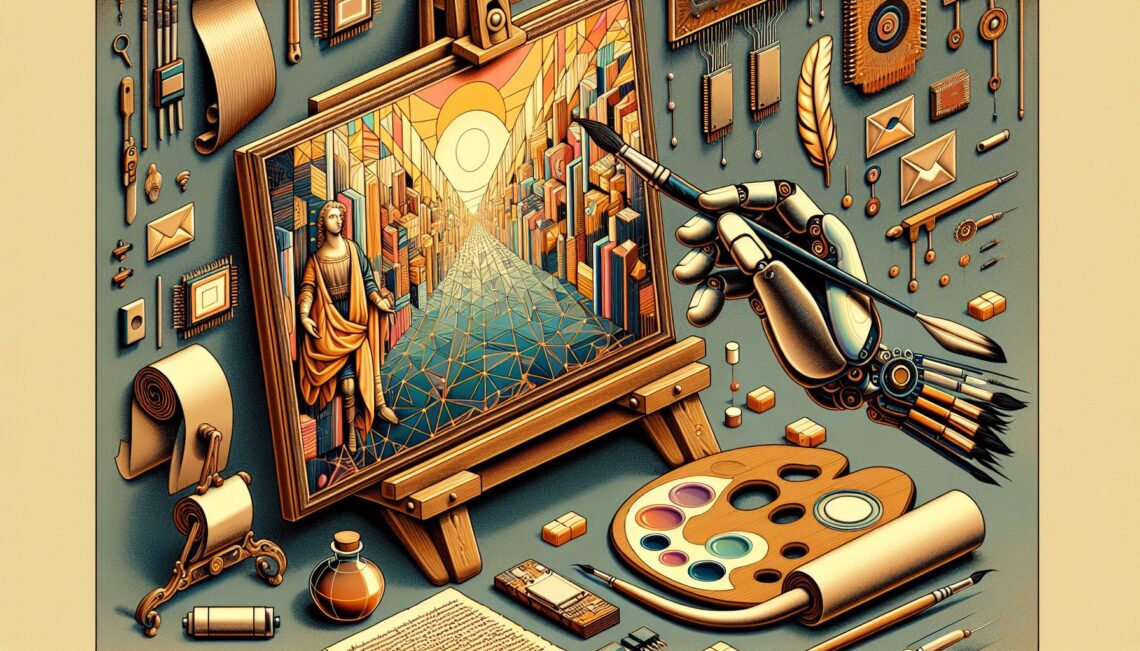
Hey, tech enthusiasts! Today, I’m diving into the awe-inspiring intersection of Artificial Intelligence and creative arts—a realm that’s rapidly evolving and paints a pretty optimistic picture of our future. Imagine AI as an unexpected artist, unlocking new dimensions of creativity and collaboration. Let’s explore how these digital brains are not just mimicking, but genuinely enriching our artistic landscape.
An Artistic Awakening: AI Steps onto the Canvas
So, picture this: it’s 2030, and you walk into an art gallery. You’re greeted with a variety of stunning pieces, from vivid paintings to hauntingly beautiful music. Here’s the twist—many of these works are the products of AI. Hard to believe? Trust me, it’s happening right now!
AI models like DALL-E and Midjourney have already demonstrated their ability to conjure up unique visual masterpieces by interpreting human prompts. Meanwhile, on the music front, platforms like OpenAI’s Jukebox are synthesizing new songs from scratch or collaborating on harmonious symphonies. It’s like having Beethoven and Picasso smack dab in the middle of a cyberpunk version of Moulin Rouge, minus the absinthe.
The Magic Behind the Machine: How AI Makes Art
Now, I can hear some of you asking, “But how exactly does AI do all this?” Well, let me break it down a bit. AI creative systems often leverage neural networks—these are basically layers of algorithms modeled after the human brain. They ‘learn’ by processing vast amounts of data, then use that knowledge to create something new.
Let’s take DALL-E as an example. When you feed it a prompt like “a jazz-playing, time-traveling penguin,” it mashes up images from its database to produce a completely novel representation. The brainy folks behind the curtain use techniques like deep learning and generative adversarial networks, or GANs. GANs are essentially two neural networks duking it out—one creating images, the other critiquing them until the outcome is convincing. The result? Art that’s sometimes mind-blowing, occasionally amusing, and always intriguing.
Bridging the Gap: AI as a Muse, Not a Replacement
I hear the skeptics out there grumbling, “Is AI gunning for artists’ jobs?” Let’s pump the brakes on dystopian fears for a second. The rise of AI art doesn’t herald the fall of human creativity. Instead, it levels up our toolkit. Think of AI not as a lone genius striving for gallery space but as a creative collaborator inspiring new ways of thinking.
Artists are leveraging AI to break through blocks and explore uncharted creative territories. For instance, Holly Herndon, an avant-garde musician, uses an AI she calls “Spawn” to collaborate on unique sound experiences. It’s a symbiotic relationship, one where artists retain their narrative power while the AI provides fresh sparks of innovation.
A Reality Check: Challenges and Ethical Dilemmas
Of course, with great creative power comes great responsibility. As AI art grows in presence and complexity, it also raises some hefty questions. Who owns an artwork produced by AI? How do we ensure artists reap the benefits of their AI-infused creations rather than falling prey to exploitation?
Current copyright laws are scrambling to keep pace with these developments, and it’s an ongoing debate. Some argue that AI art should be public domain since it’s technically generated by a non-human entity. Others suggest new frameworks to ensure human creators receive fair royalties whenever their inputs contribute to AI-generated content.
There’s also the ethical side—how we prevent AI from perpetuating biases or reinforcing stereotypes in their creative outputs. It’s crucial that those developing AI systems prioritize training these models with diverse, inclusive datasets.
Speculating the Future: An AI Creativity Boom
Let’s dream a bit and gaze into the crystal ball. Imagine a future where AI-enhanced creativity reshapes not just arts, but our entire culture. We could have personalized art shopping experiences where AI crafts pieces tailored to individual tastes in real-time. Or, picture AI-driven concert experiences where personalized, never-before-heard tracks captivate every listener.
In education, AI tools could democratize learning, allowing anyone—from beginners to seasoned pros—to develop artistic skills with the guidance of virtual mentors. The potential to nurture a more expansive, connected creative community is massive.
Conclusion: Embracing the New Muse
In this AI-powered renaissance, creativity isn’t being stolen away from humans but is instead being reimagined. While it may feel strange to share creative spaces with our silicon-based sidekicks, there’s no denying the thrilling possibilities that lie ahead. They’re here to expand our horizons and break down the traditional barriers that’ve sometimes stifled artistic expression.
To all artists out there—embrace this quirky new muse. Experiment, collaborate, and fearlessly pioneer. We’re just getting started on a journey where human imagination and AI innovation come together to paint a vibrant future. Cheers to the artful possibilities that await us all! 🎨🎶