AI in Creative Arts: The New Renaissance
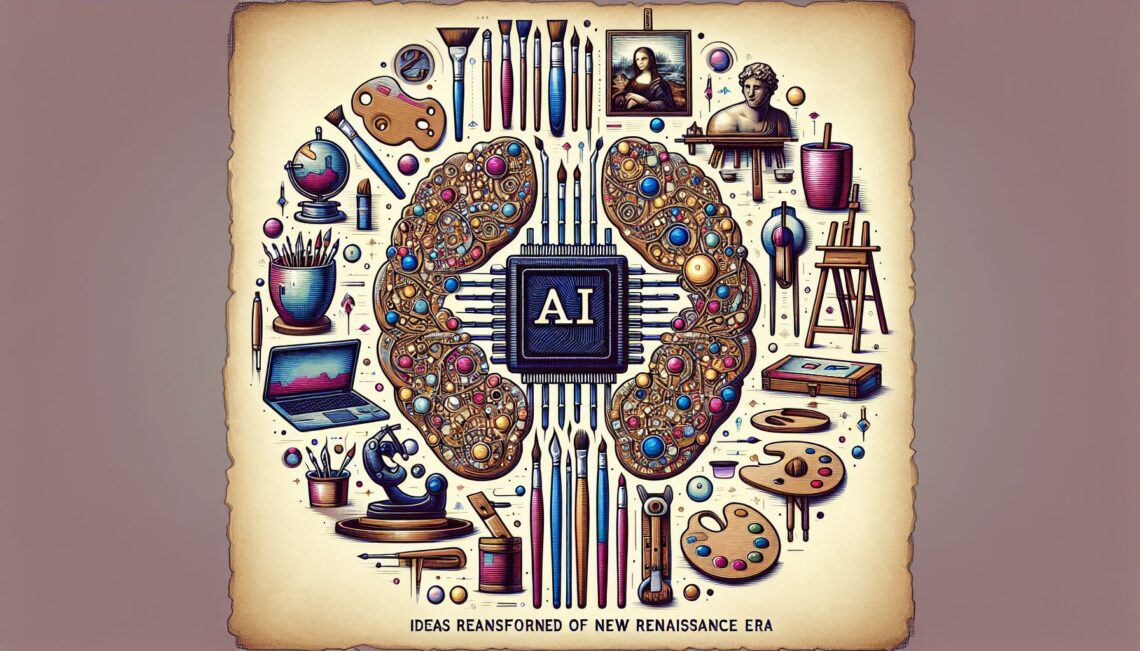
Hey there, tech aficionados! Today, we’re diving straight into a topic that’s close to my heart and has been making some serious waves in the creative world—Artificial Intelligence in the Arts. If you’re thinking robots with paintbrushes or computers spitting out symphonies, you’re on the right track. But the truth is, AI in the creative arts is so much more than that. It’s like we’ve unlocked a whole new Renaissance, except with machine learning and datasets this time around!
A Brief Overview: AI Meets Creativity
I’ve always been fascinated by how technology can transform the art world. I remember the first time I saw a computer-generated artwork that stopped me in my tracks. What was intriguing wasn’t just the visual or auditory beauty, but the realization that something without a beating heart created it. We’re used to thinking of artists as brooding, soulful beings channeling their emotions into masterpieces. But now? Now you’ve got programs that can produce stunning, emotive pieces, all thanks to some incredibly sophisticated algorithms.
The wave of AI-driven creativity is opening doors for new kinds of artistic expression and altering how we approach traditional methods. For those skeptical about AI’s place in art, let’s take a closer look at how it’s reshaping the scene.
AI in Visual Arts: More Than Just Pixels
AI’s foray into visual arts has been nothing short of revolutionary. One of the most talked-about names here is probably DeepArt, a neural network that can transform your lowly cat selfie into something that looks like it came straight out of a Van Gogh or Picasso masterpiece. But let’s not pigeonhole AI as just a glorified Instagram filter.
Take the case of Obvious, a Paris-based collective that garnered international attention when their AI-created portrait, “Edmond de Belamy,” was auctioned by Christie’s for a whopping $432,500. That’s serious coin for a piece created by an algorithm trained on 15,000 portraits painted between the 14th and 20th centuries. While the debate rages on about the value and originality of such works, it’s undeniable that AI is pushing the boundaries of what art can be.
Music to My Virtual Ears
Now, let’s talk tunes. If you’re a music lover like me, you might have raised an eyebrow at the thought of AI being able to compose music. But here we are in 2023, and AI is actually doing a pretty decent job at it. Take AIVA (Artificial Intelligence Virtual Artist), for instance. AIVA’s been creating symphonies, jazz compositions, you name it, making them a handy tool for musicians and composers who need that extra creative nudge.
One of my favorite aspects of AI music composition is collaboration. Artists aren’t being replaced; they’re finding new co-creators. Taryn Southern used AI tools to create her album “I AM AI,” released back in 2018, and it was a game-changer. Musicians today are using AI to explore new genres and sounds, something that traditional methods might not accomplish as quickly or efficiently.
Literary Lunchtime with AI
You might be tempted to dismiss AI in literature with a swipe of your Kindle, but the realm of AI-written books is gaining traction. With companies like OpenAI releasing models like GPT-3, we’re witnessing early experiments in AI-written prose and poetry. These AI models don’t just string sentences together—they analyze structure, tone, and much more to create content that’s surprisingly coherent and engaging.
Even New York Times crossword puzzles got a dose of artificial intelligence to up their game. Sure, an AI might not pen the next “Moby Dick,” but who’s to say they won’t be providing creative writing tools that help authors brainstorm or overcome writer’s block?
Implications and Ethical Quandaries
While AI is enabling new forms of art, it brings its own set of challenges and ethical questions. One of the big topics is authorship. If an AI creates a painting or a music score, who owns it? The people who programmed the AI, the AI itself (which is a bit existential), or the data used to train it?
Then there’s the fear of devaluing human creativity. Some worry that machines could overshadow human artists, but I tend to lean toward the idea that AI amplifies human creativity, offering a fresh medium rather than a replacement.
The Next Frontier: What’s Ahead for AI in Art?
We’re just scratching the surface of what’s possible with AI in creative arts. Innovations are happening at breakneck speed, and I for one can’t wait to see where we’ll go next. Maybe in a couple of years, we’ll be attending concerts performed by AI orchestras, where each algorithm plays a specific instrument. Or maybe we’ll have curated exhibitions of entirely AI-generated artwork.
The future is certainly sparking with endless possibilities, and while it’s fun to speculate, one thing is certain: AI is shaping art’s future just like the printing press, cameras, and synthesizers did in the past. So keep your eyes peeled, your ears open, and your mind ready to explore the art of the future, where man and machine paint the next Mona Lisa together.
Thanks for joining me on this journey into the cybernetic minefield where algorithms meet artistry. Until next time, stay curious and keep imagining what’s possible!