The Rise of Generative AI: Painting the Future with Code
Hey, fellow tech enthusiasts! Buckle up because today, we’re diving into the mesmerizing world of Artificial Intelligence, and more specifically, the branch that’s been making waves across the creative arts: Generative AI. If you think AI’s just here to crunch numbers and optimize searches, think again. It’s splashing colors, writing sonnets, and composing symphonies. Yes, you heard that right!
What’s Generative AI?
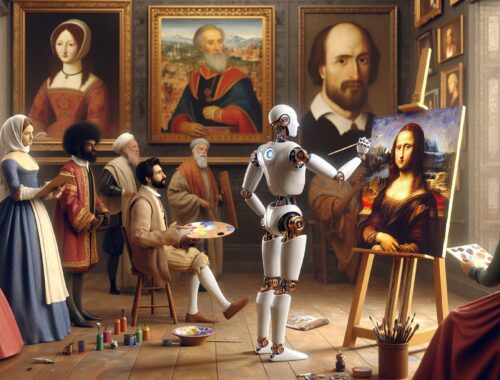
Generative AI, particularly through models like GPT-3 and DALL-E, is like giving a computer a paintbrush and telling it to create something from scratch. These models take in a bunch of data and learn the patterns, styles, and structures so well that they can generate new content all on their own. Imagine having a digital Picasso or Shakespeare at your disposal. Kind of makes you want to slap a beret on your computer and call it an artist, right?
The Art in Bytes
Let’s talk about some mind-blowing stuff happening in this realm. Recently, we’ve seen AI-generated artworks being sold for staggering amounts, with pieces going for hundreds of thousands of dollars. Take, for instance, the famous “Edmond de Belamy,” which, in case you’re wondering, isn’t your uncle’s side hustle but an AI-generated portrait that fetched almost half a million bucks at auction.
This isn’t just some sci-fi fantasy. It’s happening right now, and the implications are huge. We’re in a world where the lines between man-made and machine-generated art are blurring faster than you can say “deepfake.”
The Tech Behind the Magic
So, how does this wizardry happen? At the heart of generative AI are neural networks, particularly something called GANs (Generative Adversarial Networks). Imagine two AIs locked in a never-ending dance-off, one trying to generate the most convincing data possible, and the other critiquing its every move. Over time, this back-and-forth polishes the generated output until it’s virtually indistinguishable from the real thing.
It’s human ingenuity packed into silicon circuits, exploring creative vistas we never thought possible. And speaking of vistas, every AI-generated landscape, melody, or storyboard is like gazing into a world that was unthinkable until now.
Come for the Art, Stay for the Code
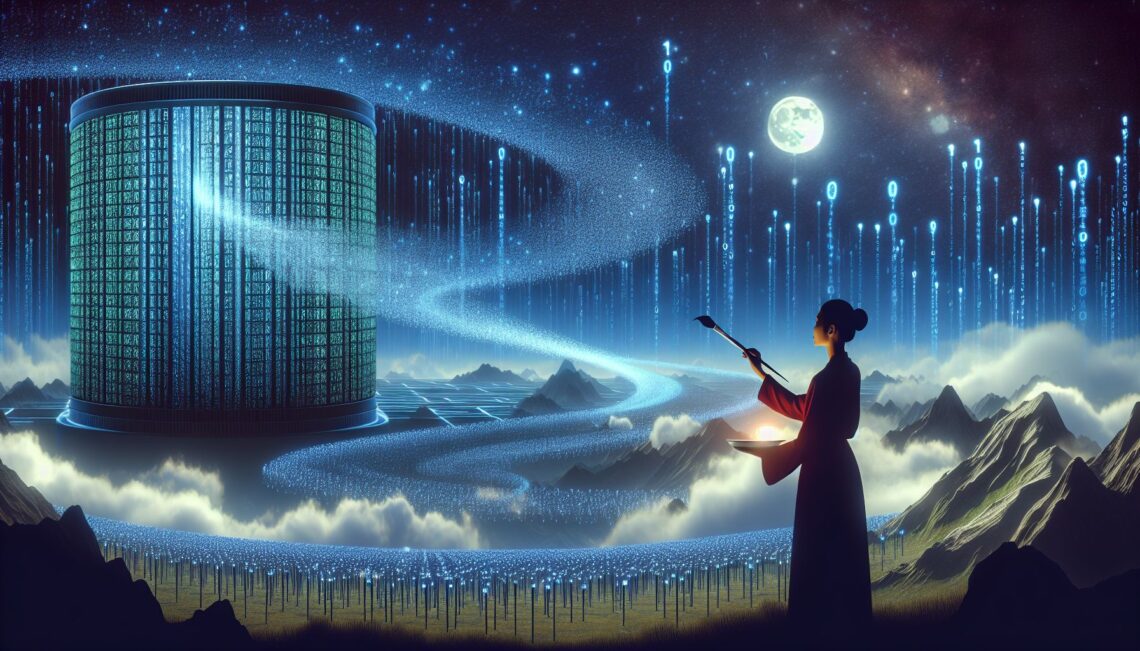
Beyond just art, the technologies enabling these creations are incredible feats of engineering. Thousands of hours of coding, billions of data points, and a sprinkle of machine learning magic create these AI wonders. It’s like the tech equivalent of baking the world’s most complex cake: the recipe is sprawling, but the final product is oh-so-satisfying.
Implications and Challenges
A Canvas of Possibilities
On the optimistic side, Generative AI democratizes creativity, giving everyone the chance to produce something beautiful. Don’t have the skills to draw a straight line? No worries, just let the AI handle it. Fancy a waltz with Mozart? There’s an AI for that. The potential for collaboration is mind-boggling. Artists and engineers are working side by side to push the boundaries of what’s possible, lifting each other’s creations to new heights.
Ethical Quandaries
With great power, however, comes a hefty sack of ethical dilemmas. Who owns the art created by AI? Is it the programmer, the computer, or a mix of both? And what about authenticity? As AIs get better at imitating human creativity, there’s a concern that genuine artistic voices might get lost in the noise.
Moreover, there’s the question of bias. Because AI learns from existing data, if the data is biased, the artworks might reflect that. It’s a heated conversation in tech circles: how do we ensure these algorithms produce inclusive and diverse creations? And let’s not forget about deepfakes—the darker side of this technology, which poses real threats to privacy and trust.
Looking Ahead: The Future of Creation
The Sky’s Not the Limit
As we peer into the future, it’s clear that Generative AI will have an even greater role in our lives. Whether it’s designing immersive VR worlds, producing scores for our favorite films, or customizing digital clothing, the possibilities seem endless. Some folks are even speculating that one day, AI could help solve the big questions: creating more effective medications, designing sustainable architecture, and perhaps even contributing to new forms of life. Talk about rewriting sci-fi as reality!
Human Plus Machine
What’s truly exciting is the idea of synergy. Humans and AI working together, leveraging each other’s strengths. While AI can crunch data and pattern-match with incredible efficiency, we bring intuition, emotion, and a touch of unpredictability to the table. It’s like a dance duet where both partners lead, creating something neither could achieve alone.
Conclusion
So, is Generative AI the next step toward a techno-utopian future? Perhaps! It’s an exhilarating time to be alive and witness these breakthroughs. We’re standing at the intersection of creativity and technology, holding our collective breath as we watch what unfolds next. Whether you’re an artist, coder, or simply a tech aficionado, there’s something awe-inspiring about witnessing the birth of a new era where art, science, and imagination coexist.
Well, there you have it, folks! Generative AI is more than just zeros and ones. It’s the blossoming of a new creative renaissance. So, keep your eyes peeled and your neural networks warm, because the future of art is digital, and it’s just getting started. Cheers to innovation and creativity, the modern art siblings we never knew could dance so beautifully together. Now, who’s up for some AI-generated karaoke? 🎤